“Truly exceptional, if not the most exceptional team of working-at-height experts I've ever worked with. Every job is executed with precision and professionalism.”
KP
Krishna Pryor
Palmiye Australia


Know what can be used, what cannot, and exactly what needs to happen next. We inspect, test, certify and audit complete height safety systems, including anchors, lifelines, rails, ladders, walkways, guardrails, hatches, platforms and davit equipment.
"We'll certify it when someone needs it" can sound like a cost-saving decision. In practice, urgent maintenance rarely waits for convenient timing.
Certification is not a promise that every possible task is safe. It confirms the inspected system's status within its documented design, intended use, limitations and inspection scope. Every contractor must still plan the work, verify the system is suitable for the task and establish safe work and rescue procedures.
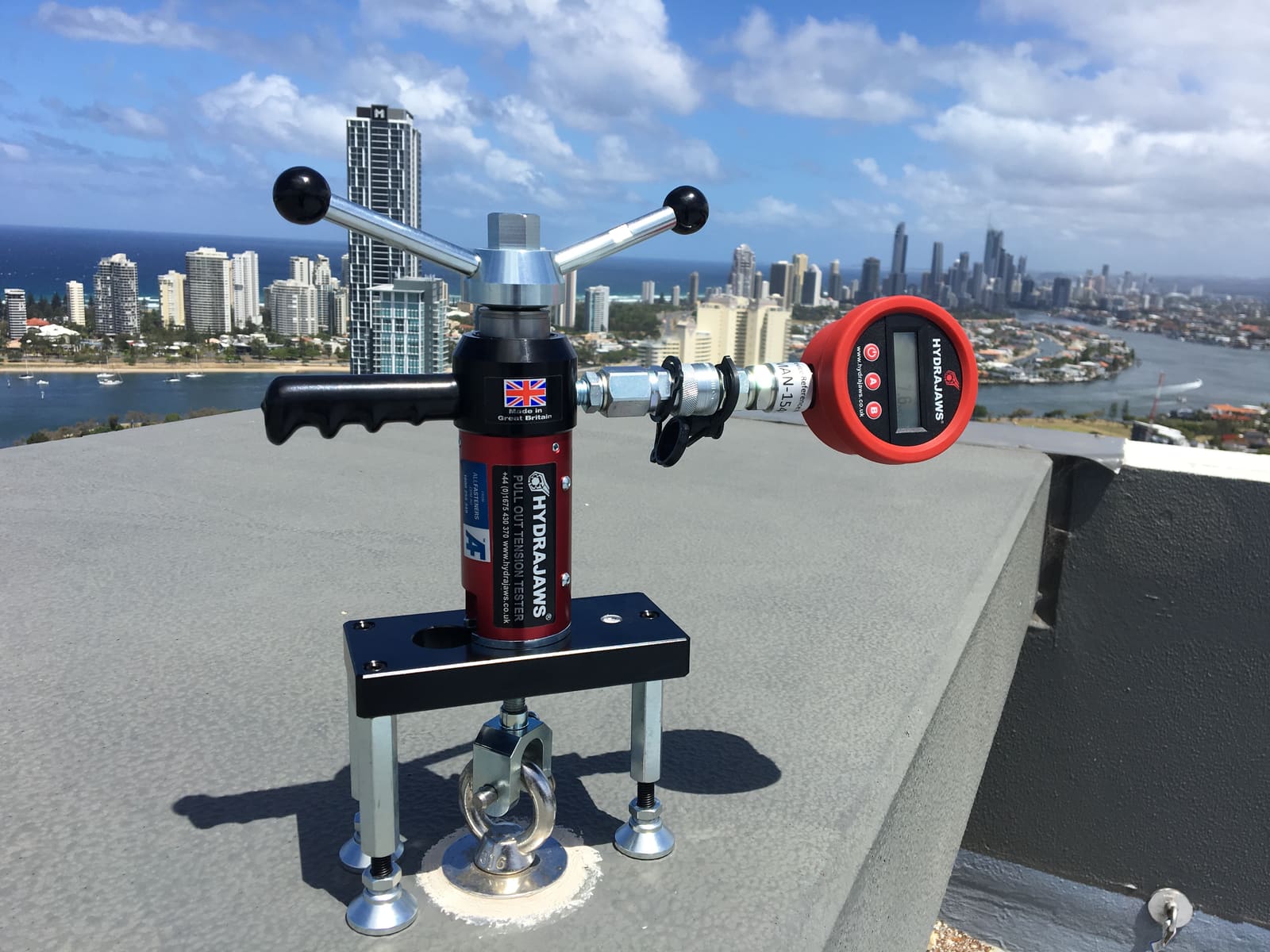
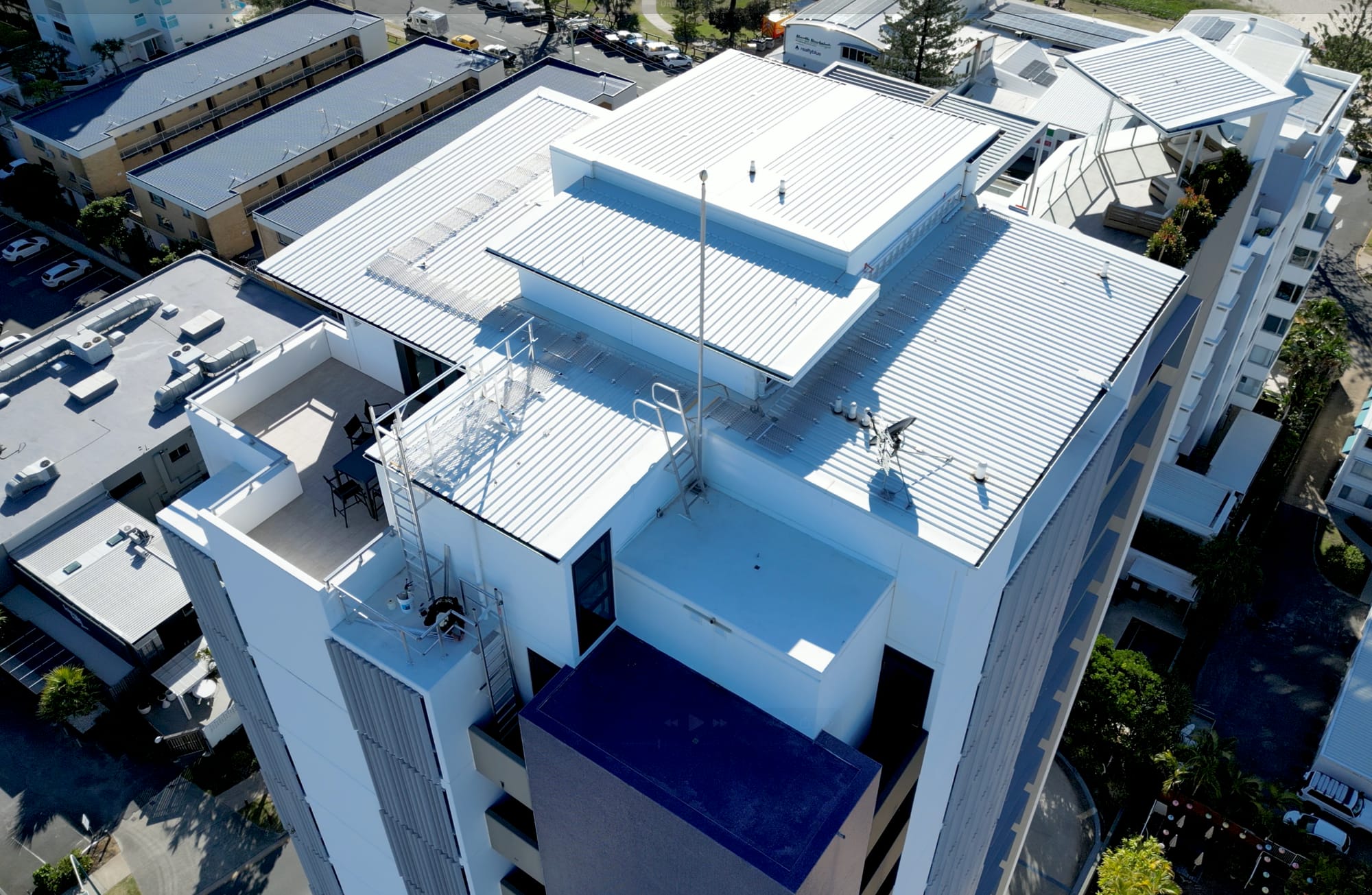
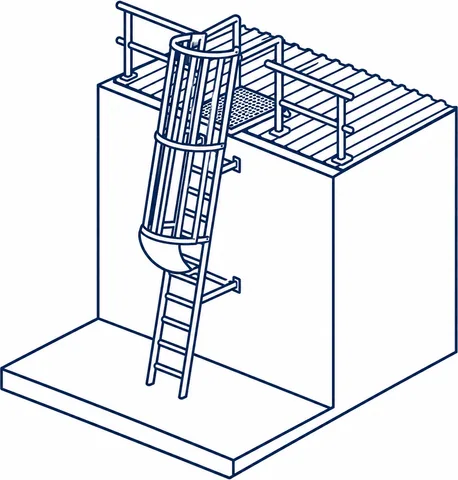
A certification tag should be the outcome of a proper inspection, not the entire service. We inspect complete systems, including anchors, lifelines, rails, ladders, walkways, guardrails, access hatches, platforms, davit equipment and associated signage and documentation:
Your report should give building managers and contractors a clear picture of the system's current status, component by component:
Inspection frequency depends on the system, its classification and use, manufacturer requirements, exposure, previous events and the applicable standards and workplace controls. For many permanently installed height safety systems, a 12-month inspection cycle is the normal management interval.
More frequent inspection may be appropriate after a fall event, impact, building work, roof replacement, severe exposure, suspected misuse or changes to the system. The building should maintain a forward inspection schedule rather than waiting for a contractor to request access.
Coastal buildings need closer attention: salt, moisture, UV exposure and wind-driven contaminants can accelerate corrosion and degradation, so inspection frequency and material selection should reflect the site environment and observed condition.
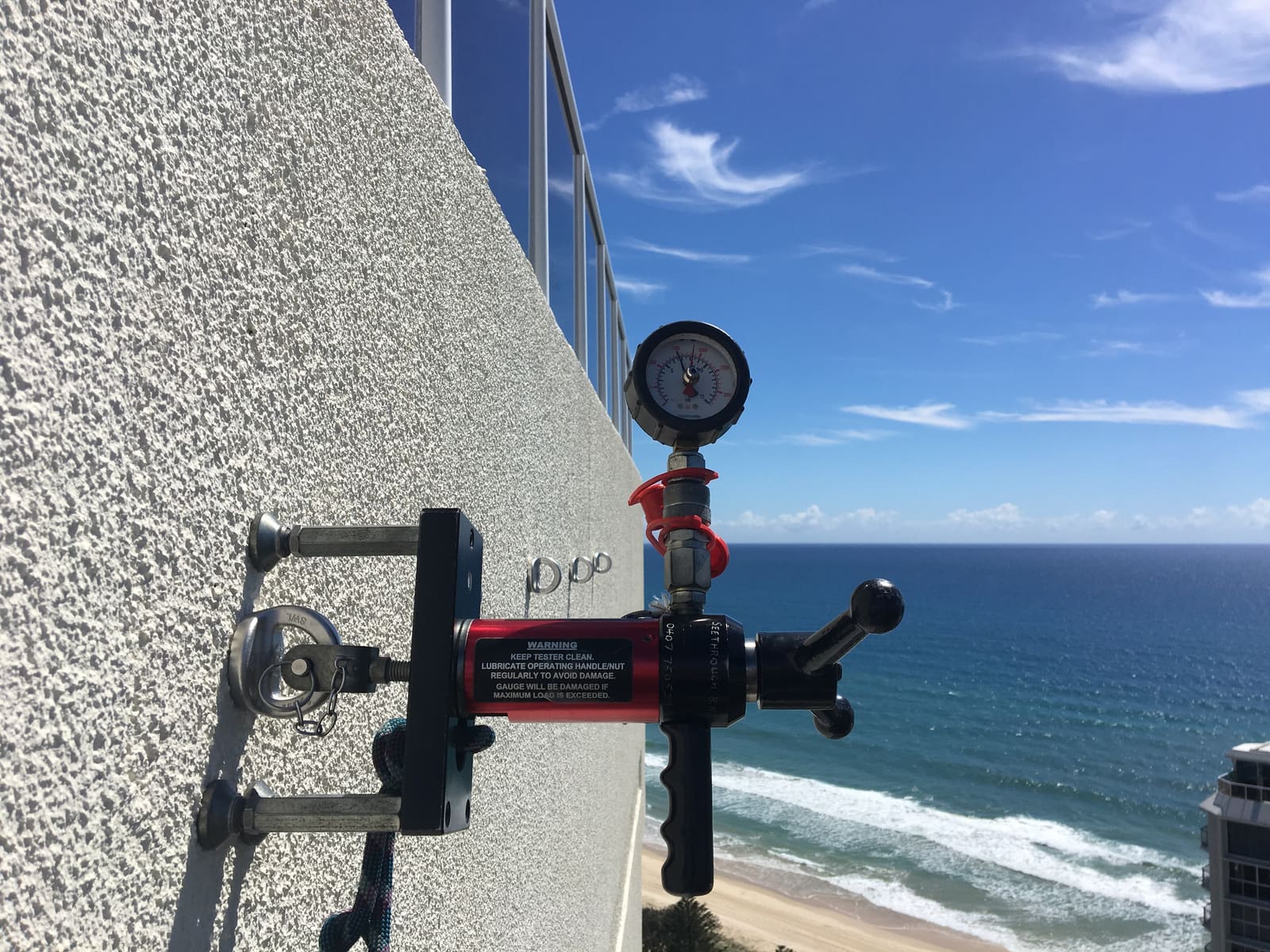
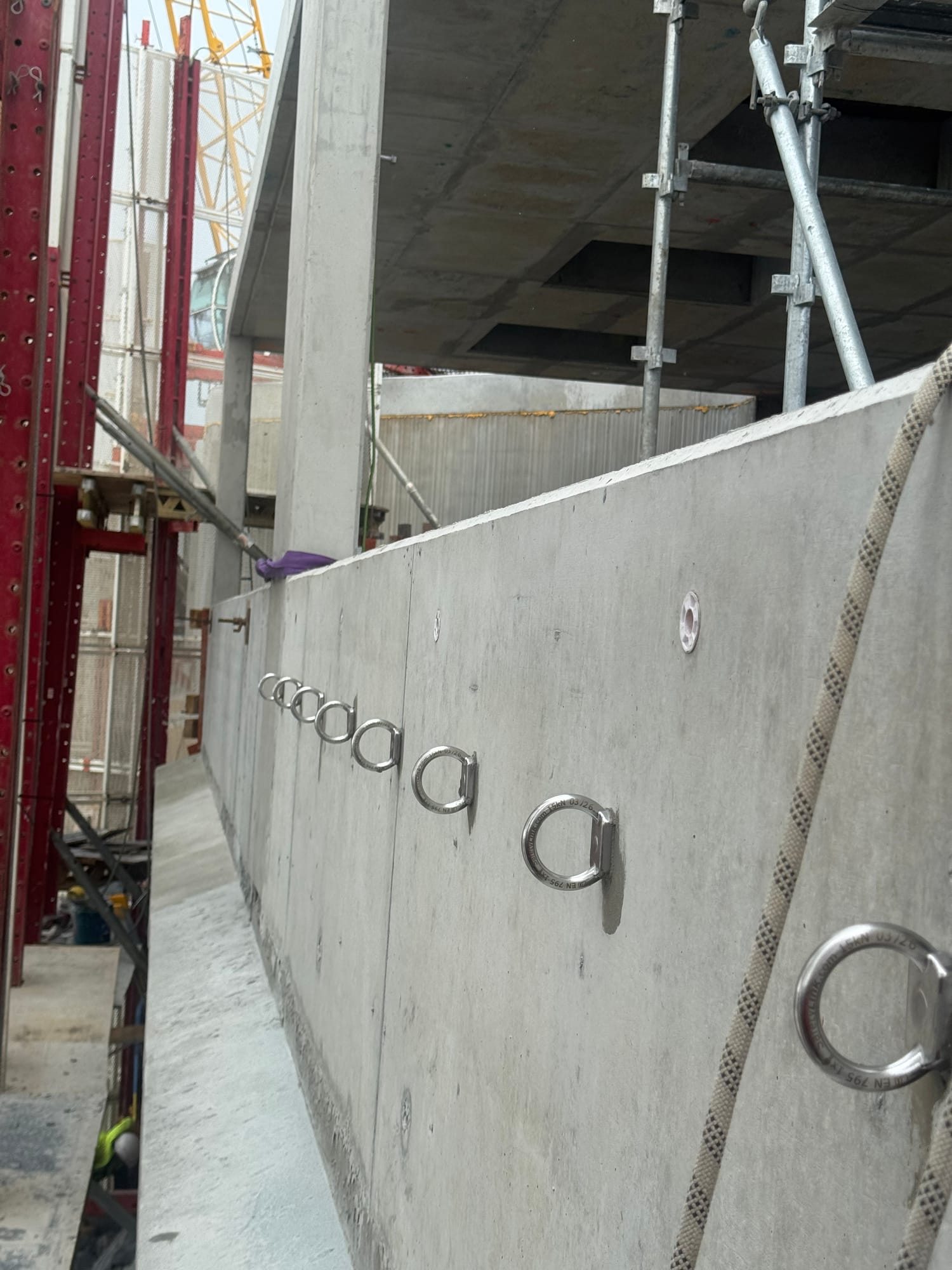
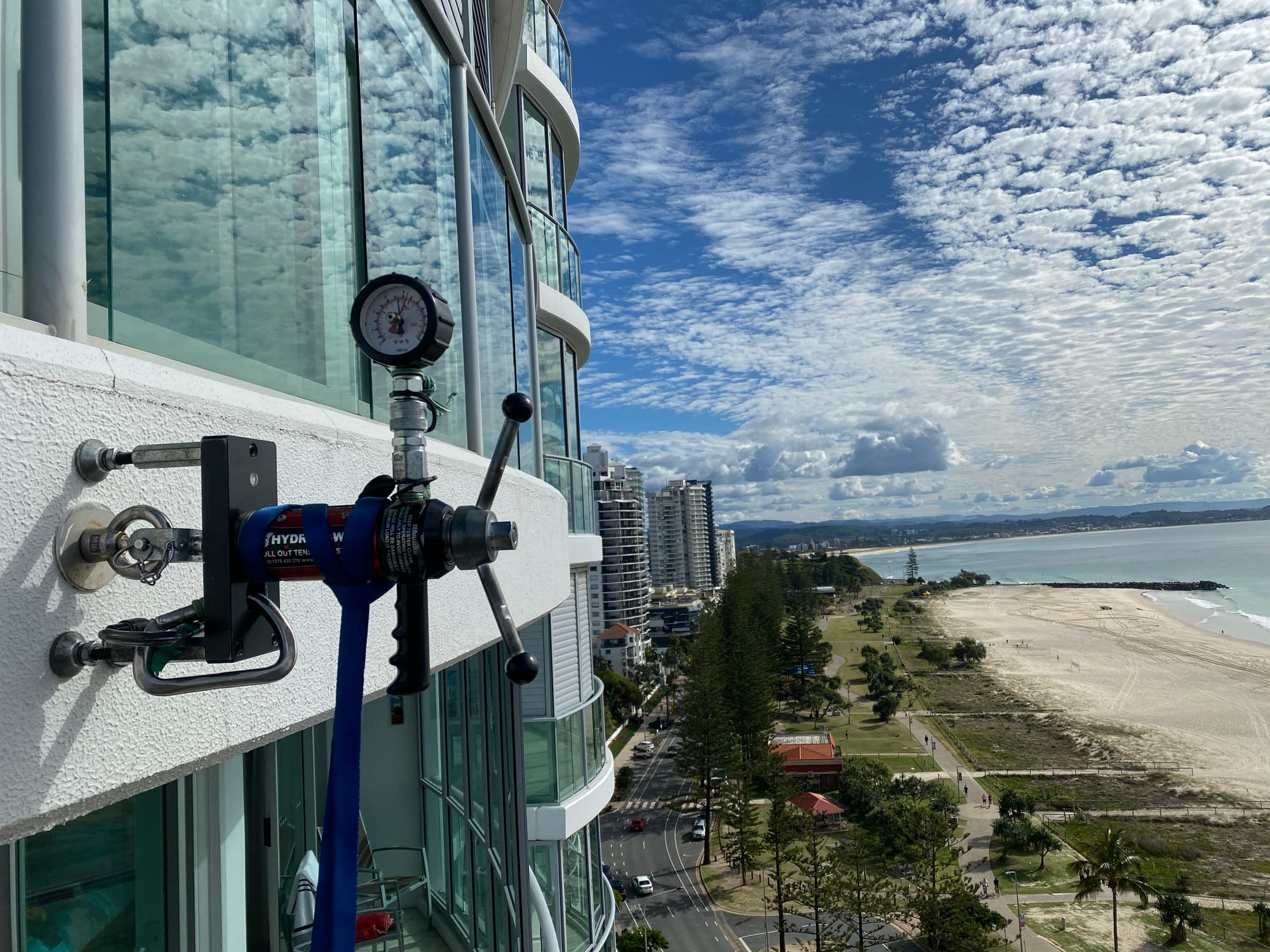
Inspection and test methods must match the anchor type, substrate, fixing method, system design and manufacturer instructions. Some concrete-fixed anchors may require proof-load testing. Other anchors, such as systems fixed to roof sheeting or timber, may rely on detailed visual and physical inspection because inappropriate load testing could damage the system or substrate.
Where proof-load testing is specified, the load, direction and duration should follow the applicable design and manufacturer requirements. The testing equipment should be suitable, calibrated and used by a competent person. Industry guidance has commonly used a defined proof load held for a minimum period, but we verify the current requirement for the specific product and installation rather than apply one rule to every anchor.
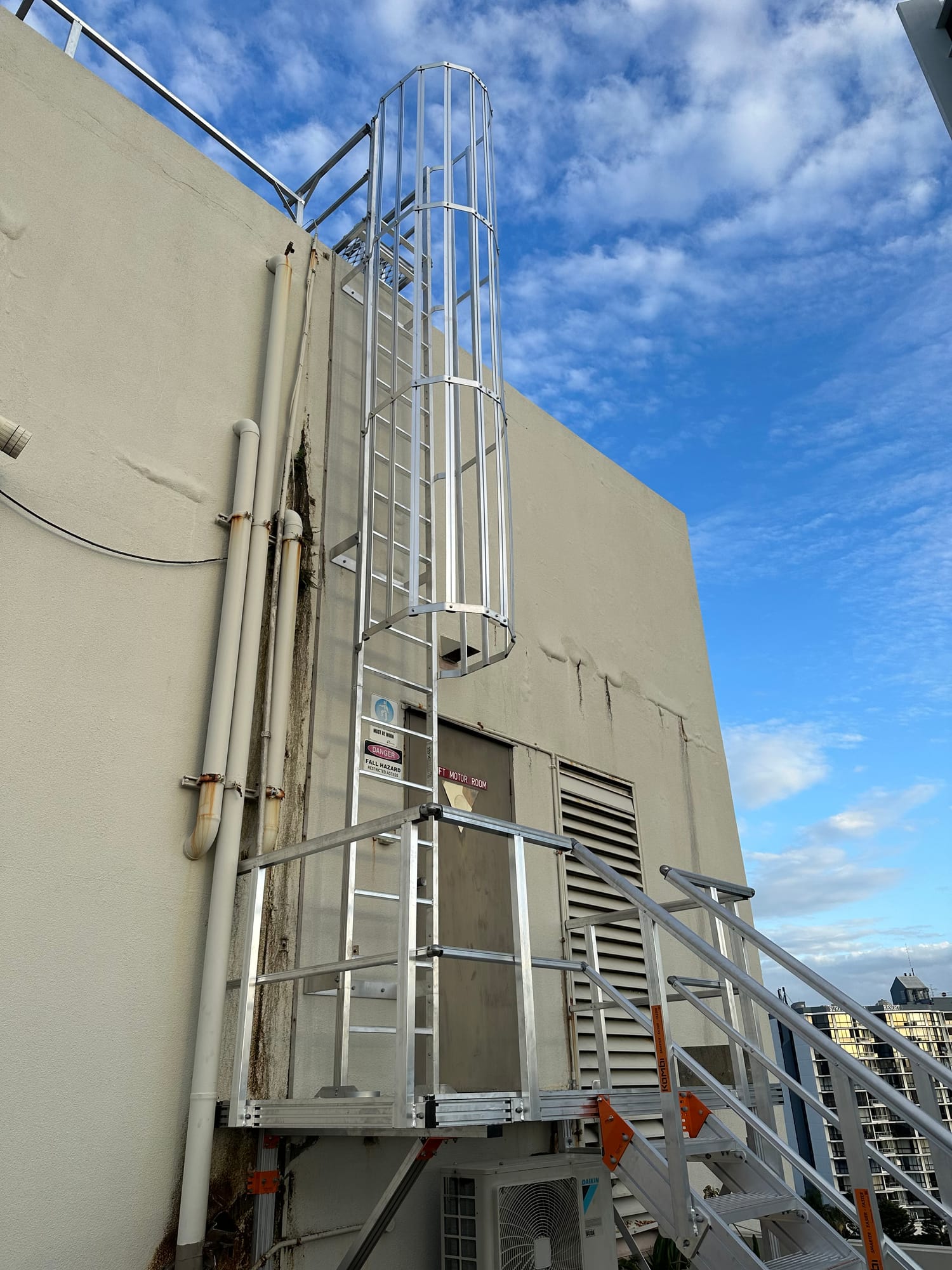
A failed component should be clearly identified and taken out of service. Where practical, the affected section may be isolated while unaffected, independently usable parts remain available, but only when the status and boundaries are unambiguous and the remaining system can be used safely.
Your report should not leave you with a generic "non-compliant" statement. It should explain the defect, consequence, priority and next action so repairs can be approved and completed efficiently. For failed systems, incomplete access or major upgrades, we can move straight to design and installation.
Inspecting only the components needed for one immediate task can create confusion later. A contractor may see a current tag and assume a larger system has been inspected. Our preferred approach is to inspect the complete accessible system, maintain one current component register and clearly isolate any failed or excluded areas.
An annual inspection is not always enough to resolve a system with missing drawings, unknown products, inconsistent tags, inaccessible components or conflicting advice from previous contractors. A documented audit can include:
Harnesses, lanyards, connectors, ropes and other personal equipment have separate inspection and record-keeping requirements from permanently installed building systems. PPE inspection can be included as a separate service where the equipment, inspection criteria and user records are available.
Safe, compliant, high-quality outcomes through a proven, repeatable process that runs the same way from first call to final sign-off.
We understand the building, the risks and your objectives before any work begins.
Practical, fit-for-purpose solutions that actually work on site, not just on paper.
Clear scope, methodology and expectations agreed up front, no surprises later.
The right people, equipment and documentation ready before day one.
Controlled delivery with clear updates, supervision and quality control throughout.
Formal sign-off, follow-up and a long-term partnership, not a one-off job.


















































Trusted by builders, engineers and property managers across South East Queensland and NSW.
“Truly exceptional, if not the most exceptional team of working-at-height experts I've ever worked with. Every job is executed with precision and professionalism.”
“I have to comment on how professional your company's service has been. I have never had a report as thorough as this. I shall highly recommend your services for ongoing works.”
“I cannot speak highly enough of them. Chay and his team have gone out of their way to assist us, nothing is ever 'too hard' and they always carry out the works to the highest standard possible.”
A snapshot of buildings where we've delivered this service.
These are the services clients most often pair with this one.
Many permanently installed systems are managed on a 12-month inspection cycle. The correct interval also depends on the applicable standard, manufacturer instructions, exposure, system use and whether an event or building change has affected it.
Treat an overdue system as requiring review before use. Arrange an inspection and provide the inspector with previous reports, drawings and any information about changes, incidents or repairs.
Only where the certified section is clearly identified, independently usable and suitable for the planned work. The report, layout, tags and access controls should make the limits unmistakable. Whole-system inspection is generally easier to manage.
No. The correct method depends on the anchor, substrate, fixing and manufacturer requirements. Some systems require proof-load testing; others are inspected without load testing because a test could damage the fixing or substrate.
The test method should follow the system design and manufacturer instructions. Industry guidance has commonly used a defined proof load held for a minimum period, but the inspector should verify the current requirement for the specific product and installation rather than apply one rule to every anchor.
It should be clearly tagged or otherwise controlled against use, recorded in the report and repaired or replaced before re-certification. The inspector should also consider whether the failure indicates a broader issue affecting similar components.
Potentially, but only if failed areas are safely isolated, the remaining system is independently functional and the limits are clearly documented and communicated. A blanket assumption that the remainder is safe is not enough.
They should be included where they form part of the building's height-access and fall-control system. The relevant inspection criteria differ from anchor and lifeline systems.
A detailed audit can rebuild much of the asset record, but some components may require manufacturer identification, engineering review, invasive investigation or replacement where their capacity and installation cannot be verified.
Competence is based on the knowledge, training, qualifications and experience needed for the specific system and inspection task. The person should also understand the relevant standards, manufacturer requirements, testing methods and reporting obligations.
A current plan helps users identify components, intended access routes and limitations. It is particularly important when components have been added, removed, relocated, failed or excluded from the inspection scope.
Salt, moisture, UV exposure and wind-driven contaminants can accelerate corrosion and degradation. Inspection frequency and material selection should reflect the site environment and observed condition.
Tell us what you need accessed, inspected, repaired or maintained. We'll come back to you within 24 hours, no fluff, no run-around.