“Truly exceptional, if not the most exceptional team of working-at-height experts I've ever worked with. Every job is executed with precision and professionalism.”
KP
Krishna Pryor
Palmiye Australia


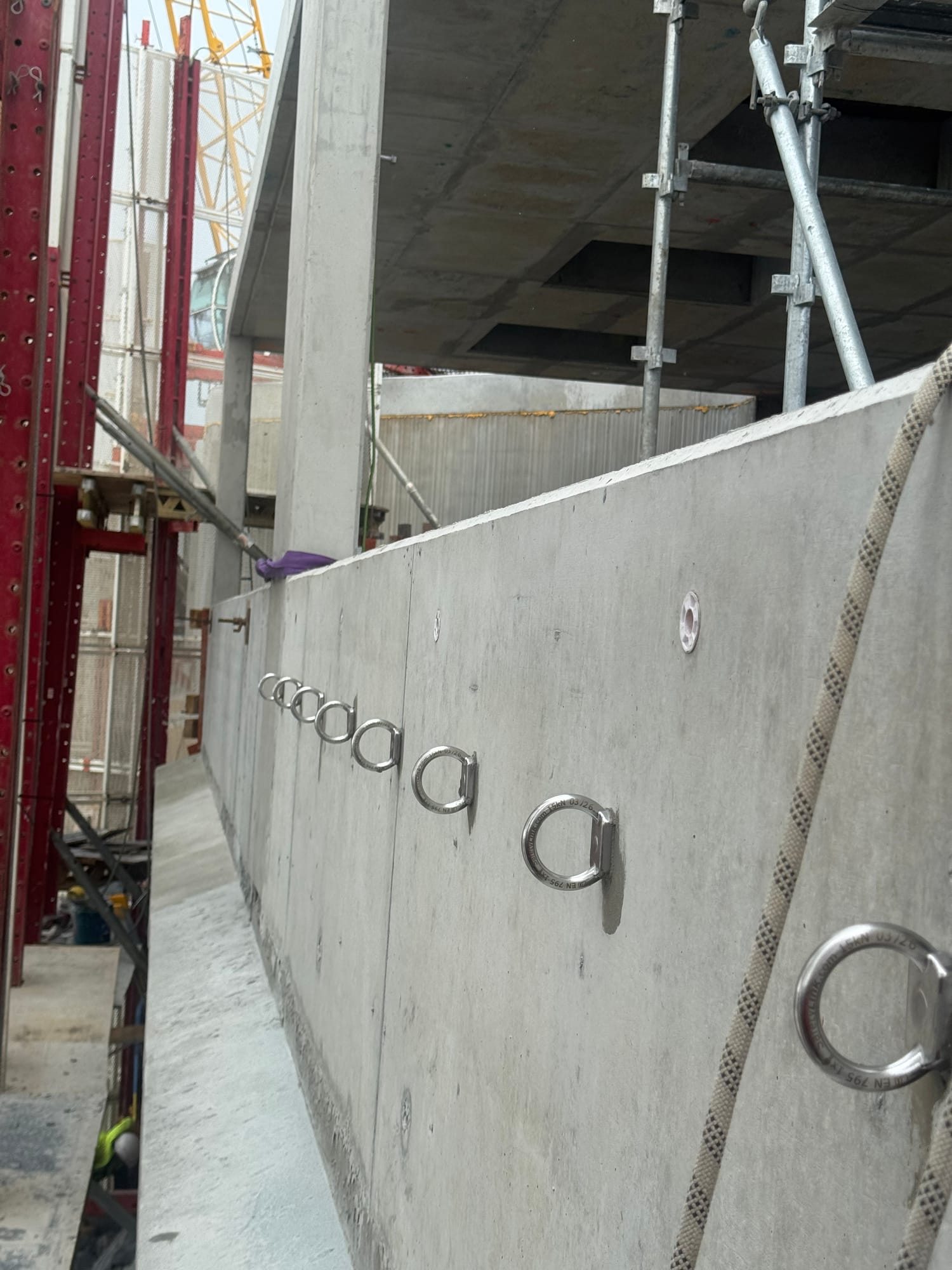
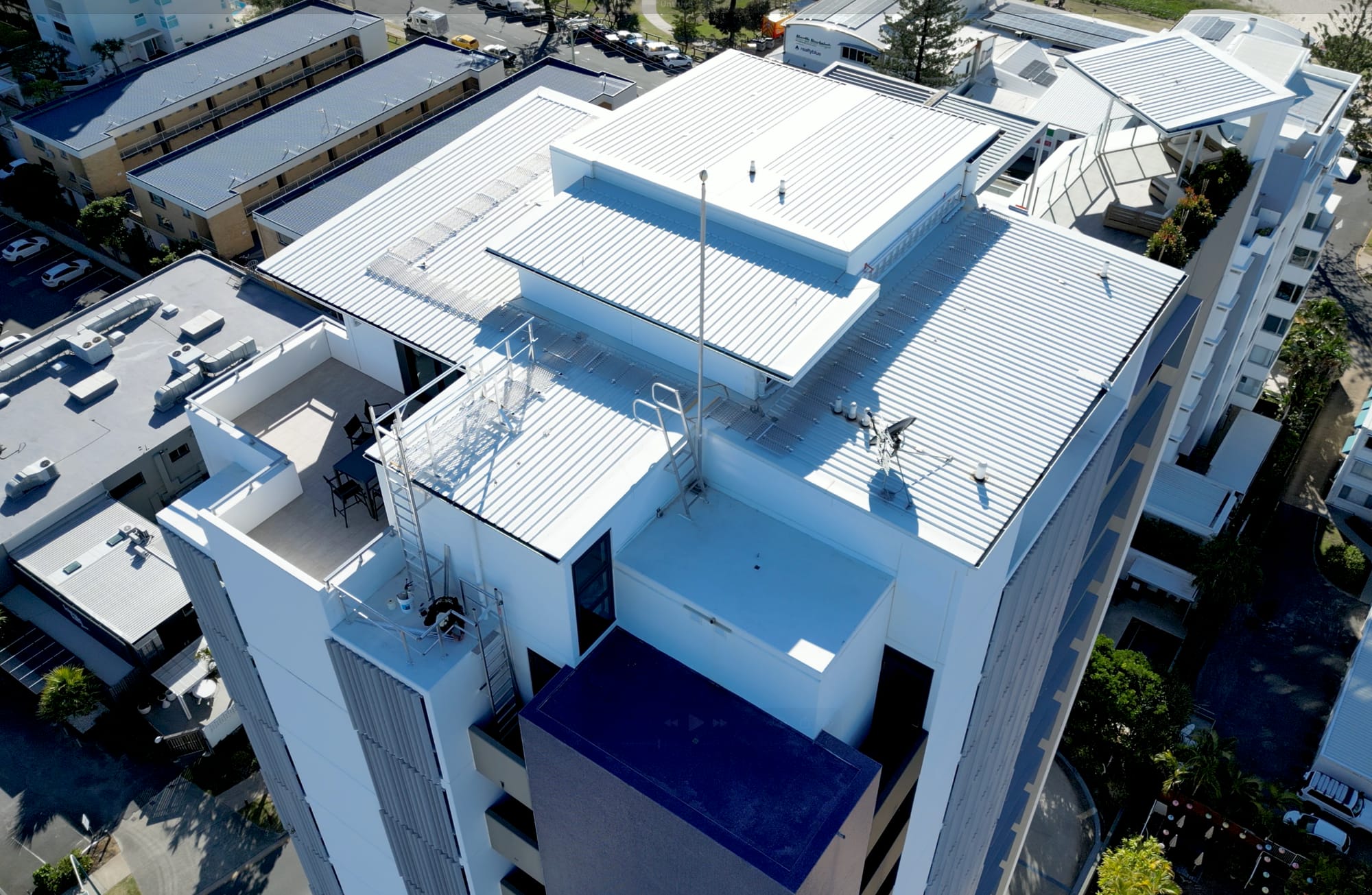
Know which anchors can be used, which cannot, and what needs to happen next. We inspect and certify roof and facade anchor points across the Gold Coast, Brisbane and Queensland, recording the outcome of each inspected anchor, identifying failed or restricted components and providing practical recommendations for repair, replacement or further investigation.
A certification tag is only useful when it is supported by a proper inspection and a clear record. Anchor points are relied on by rope access technicians, roof workers, cleaners, glaziers, waterproofers and maintenance contractors, so when their inspection status is unclear, urgent work can be delayed and contractors may be left making assumptions about equipment they did not install.
A good inspection should help the building manager and contractor understand:
Every contractor must still confirm that the anchor layout, rating, intended use, access sequence, fall clearance and rescue arrangements are suitable for the work they plan to complete.
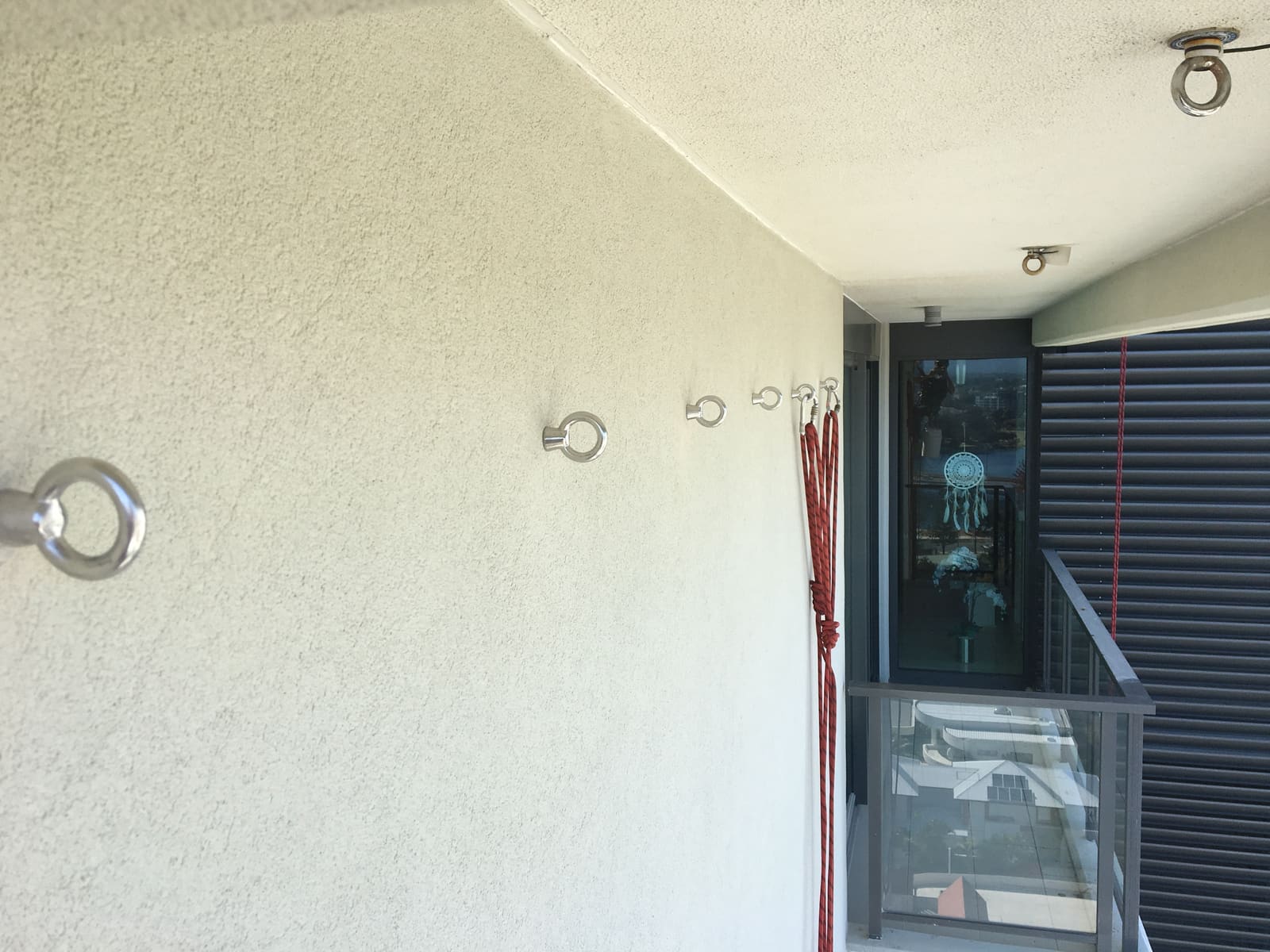
The correct inspection method depends on the anchor type, fixing method, substrate, system design and manufacturer requirements. Not every anchor should be inspected or tested in the same way.
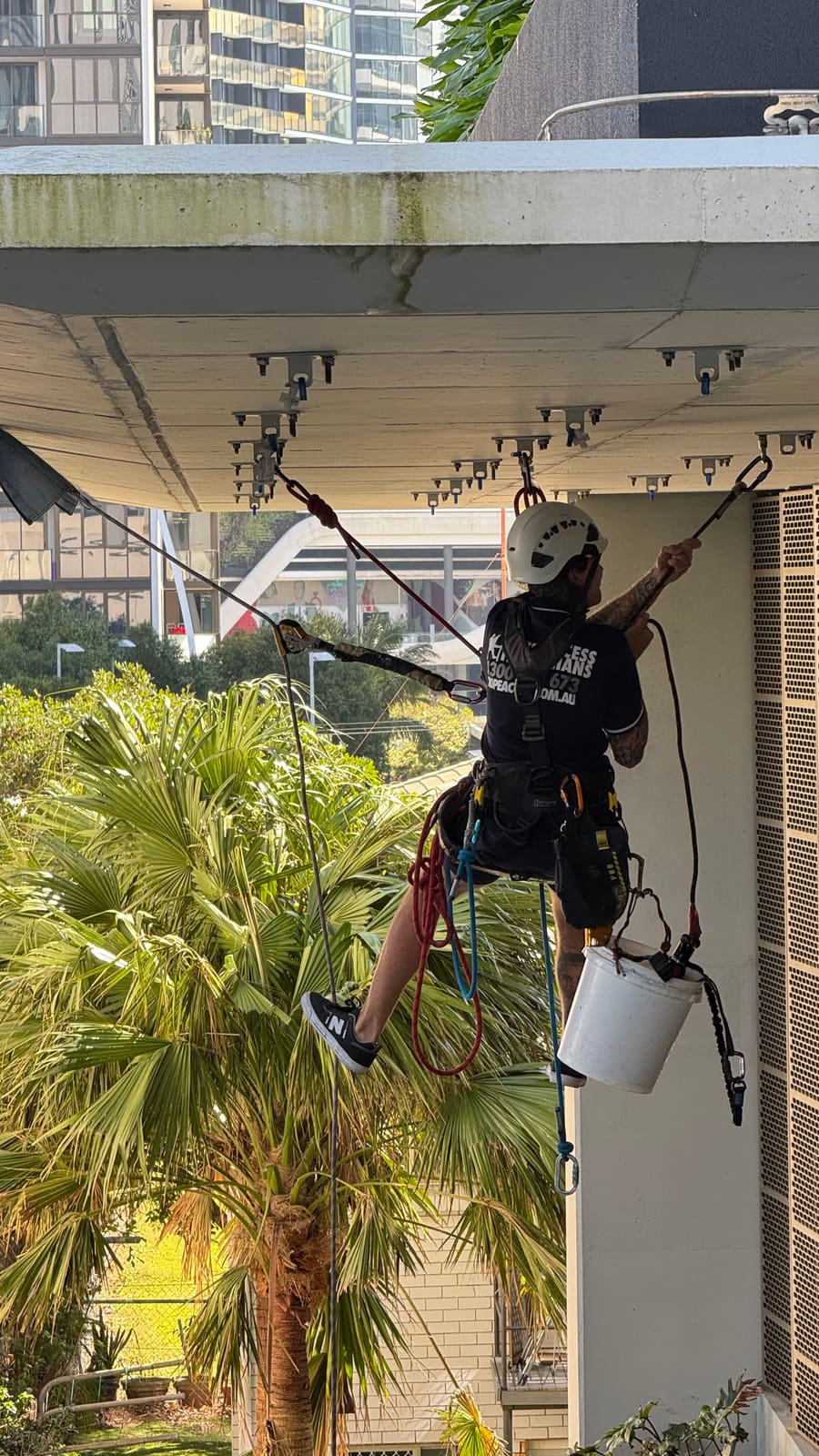
Some anchors may require proof-load testing as part of their inspection. Other anchors rely on detailed visual and physical inspection, because applying an inappropriate test load could damage the anchor, roof sheet, timber or supporting structure.
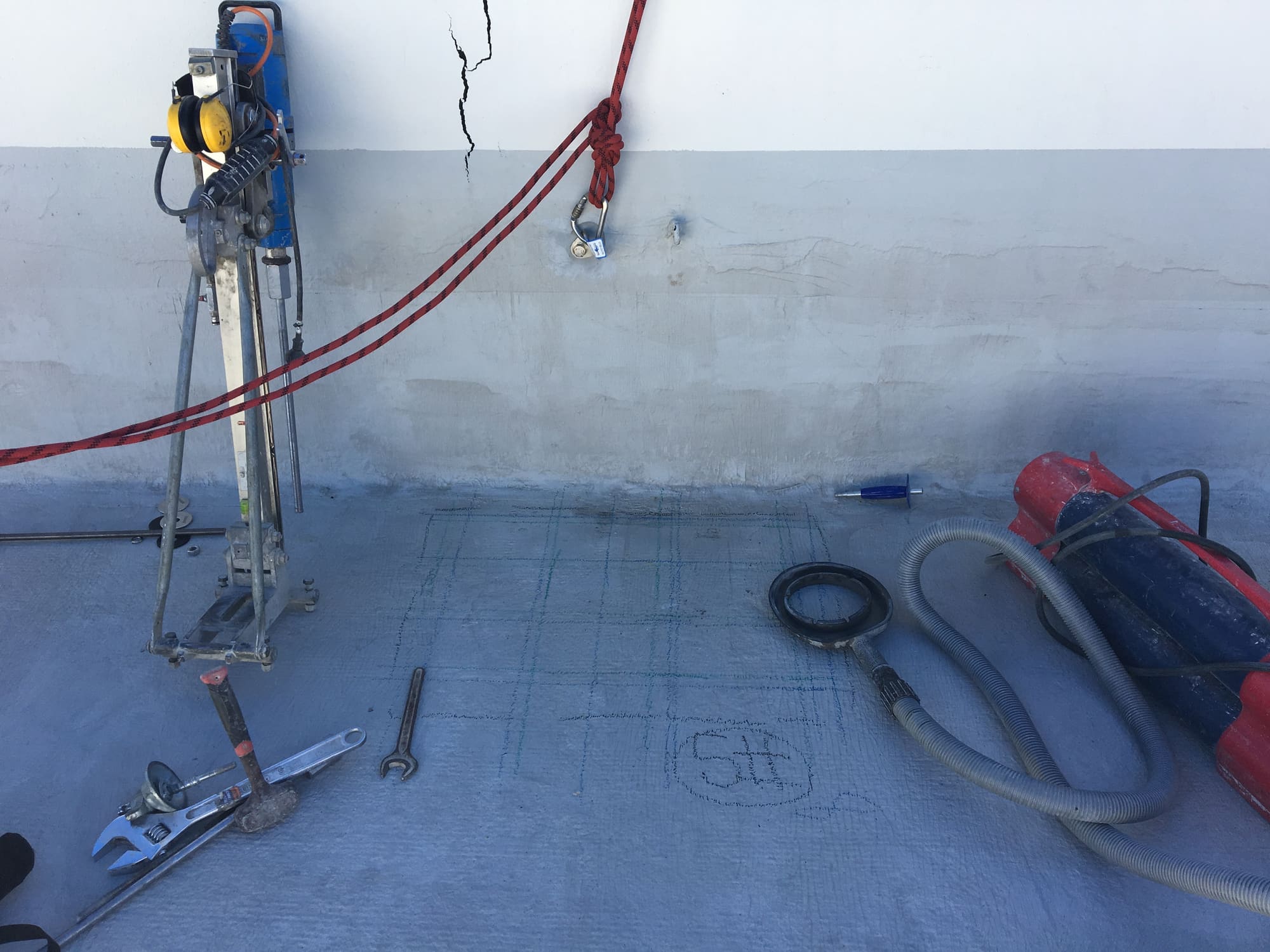
Where proof-load testing is required, we use suitable test equipment supported by current independent calibration records. The test load, direction and duration should follow the applicable product, design and manufacturer requirements, rather than one universal rule for every anchor.
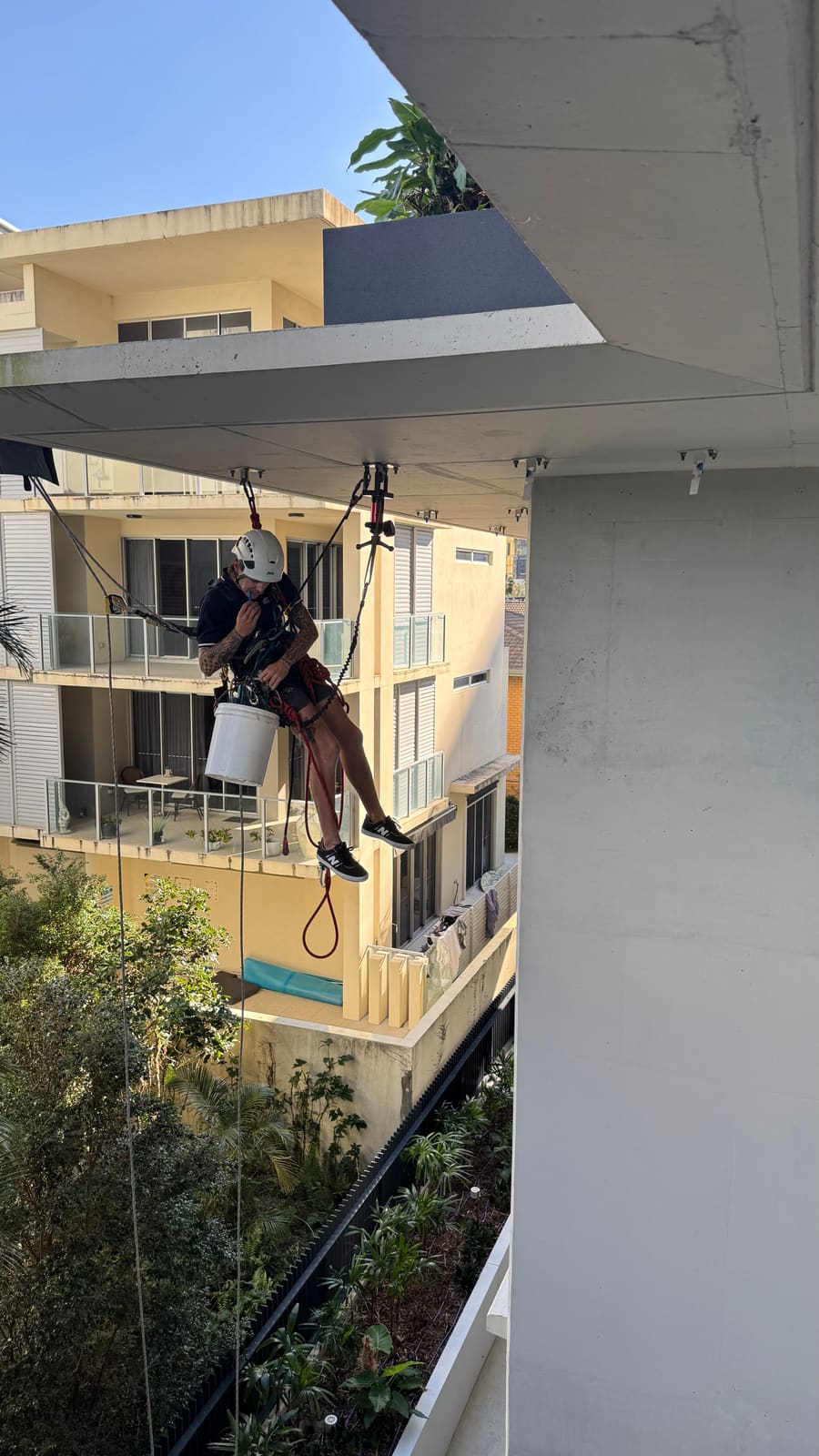
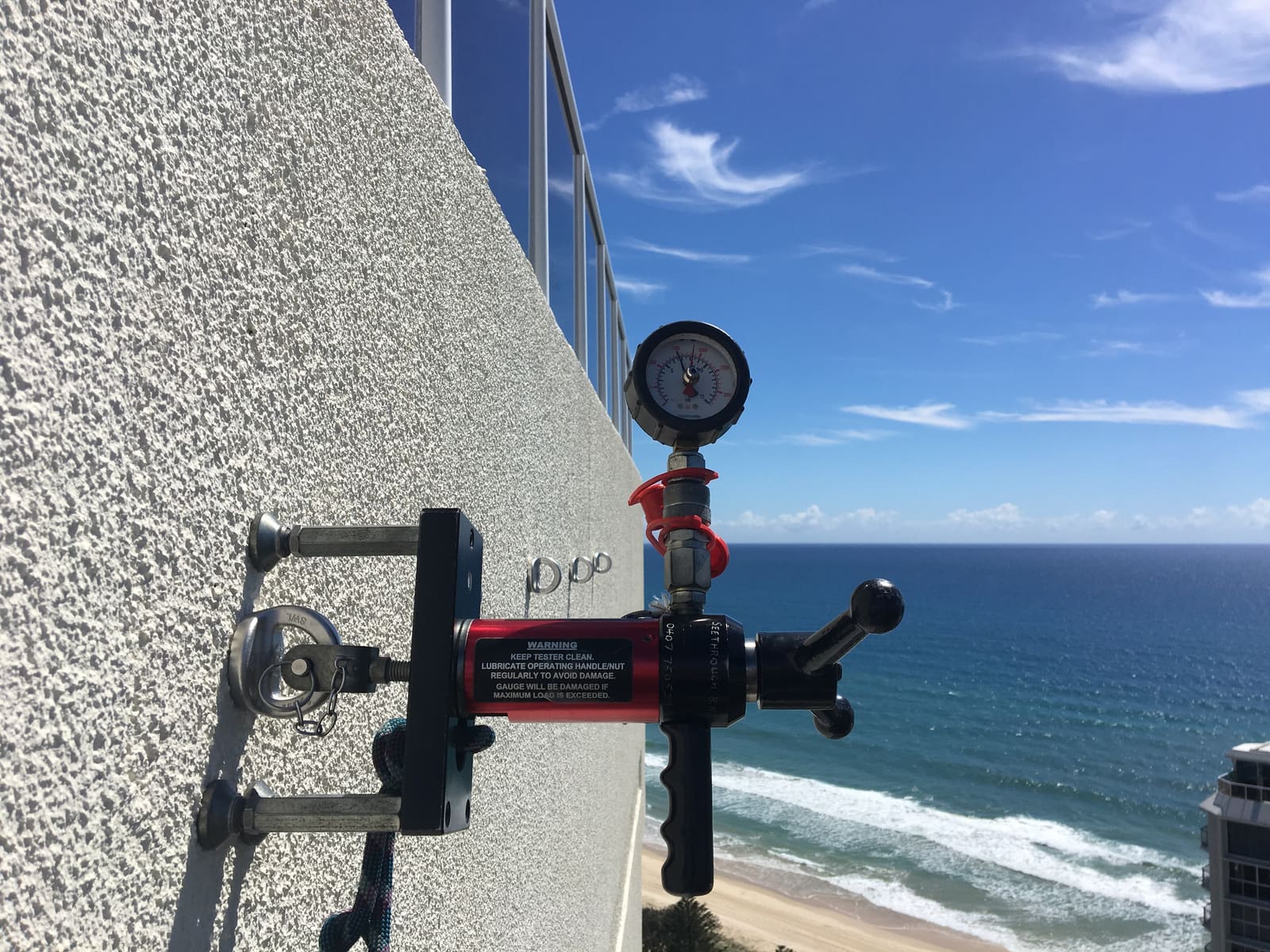
A failed anchor should be clearly identified and controlled against use until it has been repaired or replaced and accepted through the required inspection process. The report should explain the defect and next action, not simply label the entire system as non-compliant without context. Where one anchor fails, the inspector should also consider whether the cause could affect similar anchors, for example corrosion, product age, incorrect installation, substrate deterioration, roof replacement or water entry.
Can the rest of the anchors still be used? Potentially, but only where the failed anchor can be clearly isolated and the remaining anchors are independently suitable for the planned work. The limits must be obvious in the report, plan, tags and site communication, so partial certification never leaves a contractor guessing.
Older buildings may have anchors with missing drawings, unknown products, inconsistent tags or no installation records. In these cases an annual inspection may identify the problem without being able to verify every design assumption, and further work may include manufacturer identification, engineering review, substrate investigation or replacement where the installation cannot be verified with reasonable confidence. For failed anchors, replacements or upgrades, we can move to height safety design and installation.
Salt, moisture, UV exposure and wind-driven contaminants can accelerate corrosion and degradation. Coastal anchors may also be affected by roof leaks, sealant failure, galvanic corrosion, water trapped around penetrations or changes made during roof maintenance, so the inspection method and frequency should reflect the environment, observed condition, manufacturer requirements and previous findings.
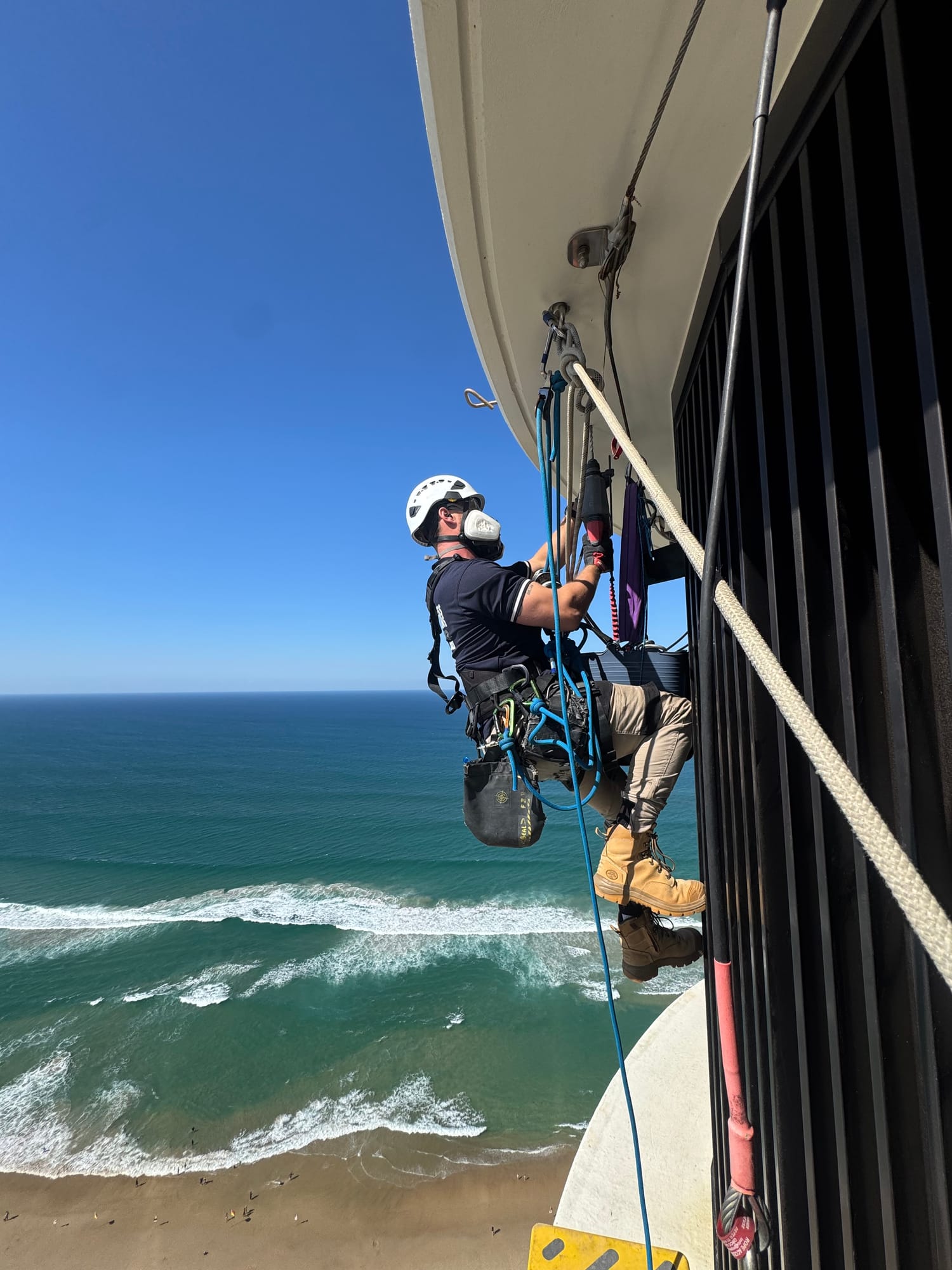
More than 250 buildings trust Rope Access Technicians to inspect and certify height safety equipment each year. Our team combines height safety inspection experience with practical rope access knowledge, so we can assess whether anchors and access arrangements work in real maintenance conditions, not only on a drawing. You get component-level reporting with clear pass, fail and restricted outcomes, suitable testing equipment with current independent calibration records, and proactive reminders before the next due date.
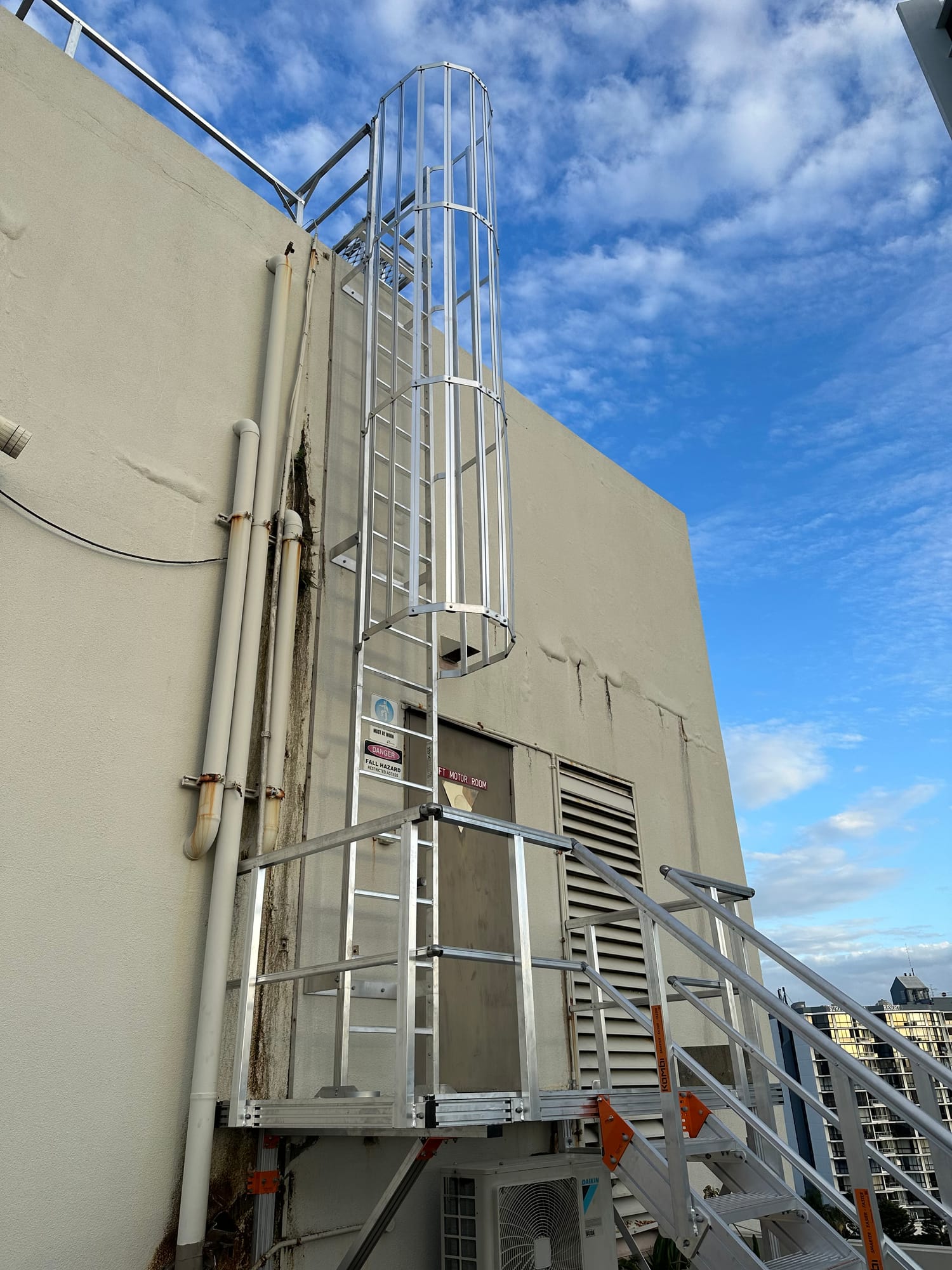
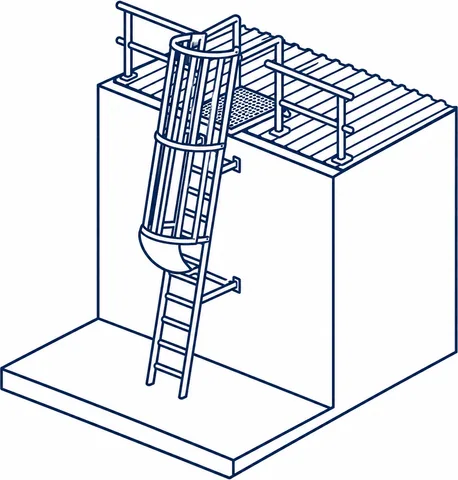
Anchor points may be only one component of a complete height safety system. If your building also has static lines, rails, davits, ladders, guardrails, walkways, hatches or platforms, these should be included in a complete Height Safety System Inspection and Certification so every component is recorded under one clear scope. Anchor certification does not replace the contractor's work planning: the contractor must confirm the anchors are suitable for the task and establish appropriate access, fall protection and rescue arrangements before work begins.
Safe, compliant, high-quality outcomes through a proven, repeatable process that runs the same way from first call to final sign-off.
We understand the building, the risks and your objectives before any work begins.
Practical, fit-for-purpose solutions that actually work on site, not just on paper.
Clear scope, methodology and expectations agreed up front, no surprises later.
The right people, equipment and documentation ready before day one.
Controlled delivery with clear updates, supervision and quality control throughout.
Formal sign-off, follow-up and a long-term partnership, not a one-off job.






















































Trusted by builders, engineers and property managers across South East Queensland and NSW.
“Truly exceptional, if not the most exceptional team of working-at-height experts I've ever worked with. Every job is executed with precision and professionalism.”
“I have to comment on how professional your company's service has been. I have never had a report as thorough as this. I shall highly recommend your services for ongoing works.”
“I cannot speak highly enough of them. Chay and his team have gone out of their way to assist us, nothing is ever 'too hard' and they always carry out the works to the highest standard possible.”
A snapshot of buildings where we've delivered this service.
These are the services clients most often pair with this one.
Many permanently installed anchor systems are managed on a 12-month inspection cycle. The correct interval also depends on the system design, manufacturer requirements, exposure, use, previous events and the applicable inspection criteria.
No. The correct method depends on the anchor, substrate, fixing method and manufacturer requirements. Some concrete-fixed anchors may require proof-load testing. Other anchors, including some roof-sheet or timber systems, may be inspected without load testing because an unsuitable test could damage the fixing or substrate.
Proof-load testing applies a specified test load to an anchor using suitable equipment. It is intended to verify the installed anchor against the applicable inspection requirement. It does not automatically establish every aspect of the anchor's original design capacity or remaining life.
The duration should follow the applicable product, design and manufacturer requirements. A single test duration should not be applied to every anchor without first confirming the correct method for that installation.
The anchor should be clearly identified and controlled against use. It must remain out of service until the required repair, replacement, investigation and reinspection have been completed.
Potentially. The remaining anchors must be independently suitable for the planned work, and the failed area must be clearly isolated and documented. The report and site information should make the limits unmistakable.
Possibly. Age alone does not determine the outcome. The inspector needs to consider the product, condition, installation, substrate, records, manufacturer information and current intended use. Unknown or unverifiable anchors may require further investigation or replacement.
Yes, where the product is suitable for the roof profile and structure and has been installed, used and maintained in accordance with its design and manufacturer requirements.
Potentially. These locations require correct product selection, structural consideration, loading direction and compliance with the design and manufacturer limitations. They should not be treated as generic fixing locations.
Provide the previous inspection report, anchor layout, installation or engineering records, product manuals, known repair history and information about roof replacement, solar installation, new plant or other building changes.
It should identify the inspection scope, each inspected anchor, the result, test method where applicable, defects, inaccessible or excluded items, photographs, calibration evidence where testing was completed and clear next actions.
Yes. If the building also has static lines, rails, ladders, guardrails, walkways, davits, hatches or platforms, request a complete height safety system inspection so every component is recorded under one clear scope.
Anchor certification does not replace the contractor's work planning. The contractor must confirm that the anchors are suitable for the task and establish appropriate access, fall protection and rescue arrangements before work begins.
Common issues include corrosion, loose or damaged components, substrate deterioration, water entry, missing identification, roof changes, incompatible repairs, deformation, damaged welds, absent documentation and installations that cannot be verified.
Cost depends on the number and type of anchors, access, testing method, site documentation, building height and whether additional equipment or investigation is required. Supplying the previous report and layout usually helps us quote more accurately.
Tell us what you need accessed, inspected, repaired or maintained. We'll come back to you within 24 hours, no fluff, no run-around.