“Truly exceptional, if not the most exceptional team of working-at-height experts I've ever worked with. Every job is executed with precision and professionalism.”
KP
Krishna Pryor
Palmiye Australia


Cracked, missing or poorly installed sealant can let water into a building, but simply covering the visible gap is rarely a reliable repair. We inspect, remove and replace failed facade sealants across high-rise, commercial and multi-residential buildings, investigating recurring leaks and installing joint sealing suited to the substrate, movement, exposure and location.
Joint sealants must remain bonded and flexible while a building moves through expansion and contraction, wind loading, temperature changes, UV exposure and repeated wetting and drying. Once the sealant loses adhesion, splits, hardens, pulls away or is installed with the wrong profile, the joint may no longer perform as intended. Common warning signs include:
A visible gap near a leak is not proof that it is the source. Water can travel through facade cavities and emerge several metres, or multiple levels, away from the original defect. That is why persistent leaks should be investigated before broad areas are indiscriminately sealed.
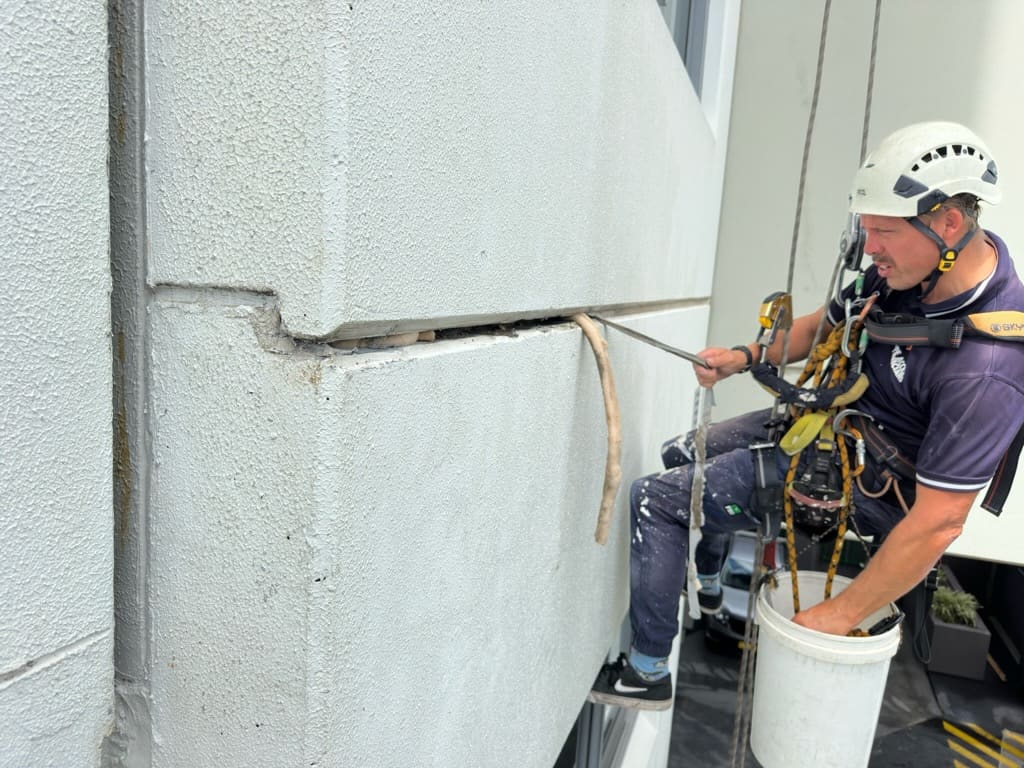
We undertake targeted repairs and larger-scale sealant replacement programs, including:
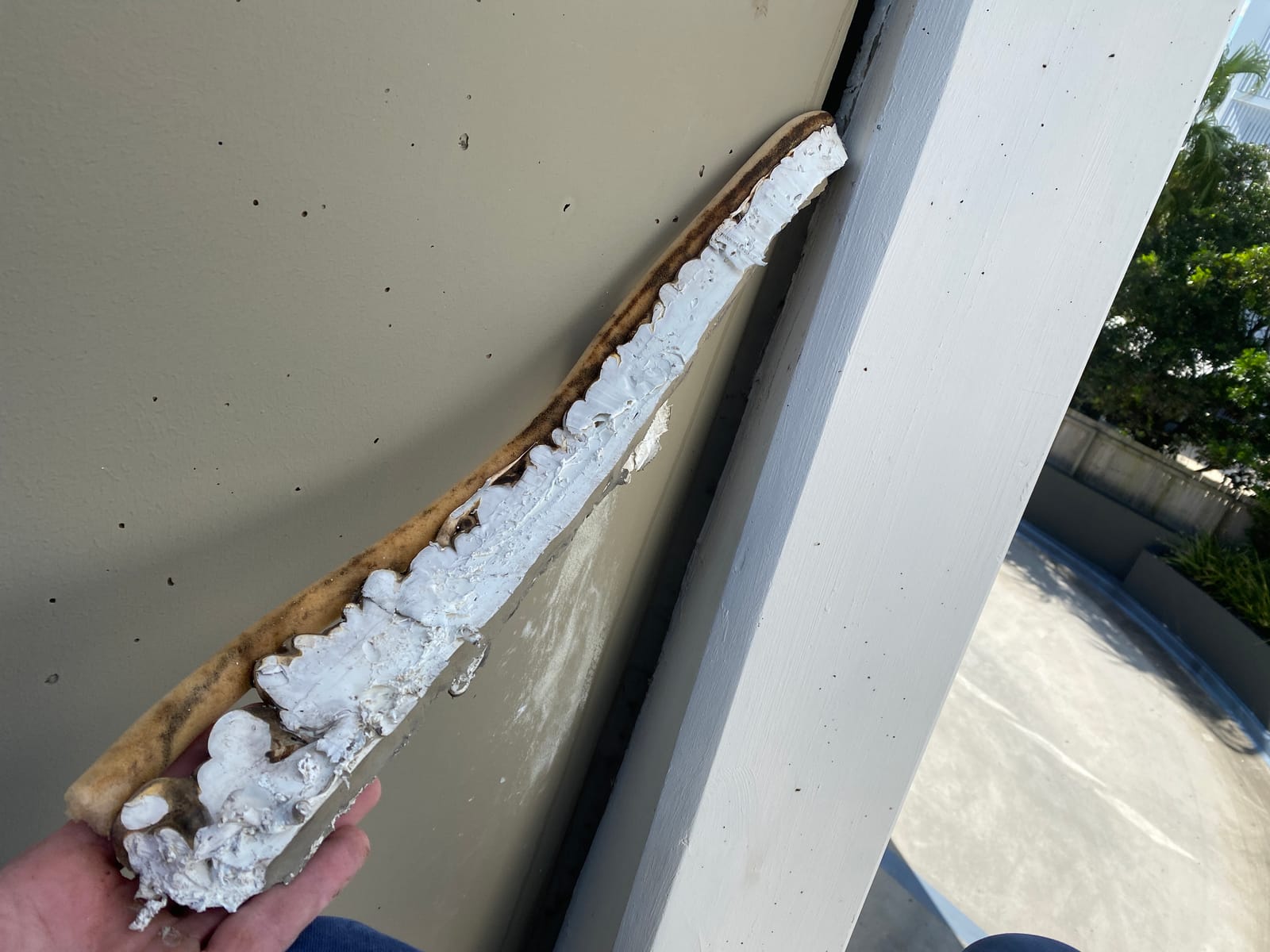
Oversealing may hide the visible crack without correcting the reason the joint failed. New sealant applied over deteriorated, contaminated or incompatible material may have poor adhesion and can make future removal more difficult. It can also cover drainage openings, weep holes or subsill discharge points that are meant to release water from the facade system.
Our normal approach is to cut out failed sealant and prepare the joint correctly rather than applying another bead over the top. Where existing material cannot be removed, access is limited or a temporary repair is requested, we explain the limitation and the expected service life before proceeding.
Backing rod does more than reduce sealant use. It helps establish the correct depth and profile and acts as a bond breaker so the sealant adheres to the two joint faces rather than the base of the joint. Product selection and joint dimensions must follow the relevant manufacturer's current technical data.
There is no single product that is right for every facade joint. A sealant that performs well around glazing may not be suitable for a paintable concrete joint, a trafficable area or a location exposed to prolonged moisture. Compatibility with coatings, membranes, glazing components and existing sealants must also be considered.
Our team includes qualified glaziers, waterproofers, carpenters and painters. Each trade uses sealants in different building interfaces, so we combine that practical knowledge with current manufacturer guidance when selecting a system. Depending on the application, we consult with manufacturers and review technical data for adhesion, primer requirements, movement capability, weather exposure, paintability and substrate compatibility.
Recurring water ingress can be stressful for building managers, owners and occupants, particularly when several contractors have already attempted repairs. The source may be failed joint sealant, but it may also involve cracked render, defective membranes, unsealed fixings, window installation defects, flashings, roof sheeting, cladding interfaces or blocked drainage paths.
Where the source is not clear, we can combine close-up facade access with staged water testing and moisture observations. AAMA 501.2-style nozzle testing may be suitable for checking specific joints, glazing details and permanently closed interfaces, planned so individual areas can be isolated rather than saturating the entire facade and creating an inconclusive result. Once the likely source is identified, we can provide a targeted repair scope or coordinate joint sealing with related glazing, waterproofing or facade repair work.
We provide caulking and facade joint sealing for body corporates, strata managers, building and facility managers, remedial builders, developers, engineers, commercial property owners and trade contractors across the Gold Coast, Brisbane and surrounding areas. Send us the building address, affected elevation or unit numbers, photographs, previous reports and details of when the leak occurs, and we will recommend the next step, whether that is a quotation, close-up inspection, targeted testing or a staged repair.
Safe, compliant, high-quality outcomes through a proven, repeatable process that runs the same way from first call to final sign-off.
We understand the building, the risks and your objectives before any work begins.
Practical, fit-for-purpose solutions that actually work on site, not just on paper.
Clear scope, methodology and expectations agreed up front, no surprises later.
The right people, equipment and documentation ready before day one.
Controlled delivery with clear updates, supervision and quality control throughout.
Formal sign-off, follow-up and a long-term partnership, not a one-off job.









































Trusted by builders, engineers and property managers across South East Queensland and NSW.
“Truly exceptional, if not the most exceptional team of working-at-height experts I've ever worked with. Every job is executed with precision and professionalism.”
“I have to comment on how professional your company's service has been. I have never had a report as thorough as this. I shall highly recommend your services for ongoing works.”
“I cannot speak highly enough of them. Chay and his team have gone out of their way to assist us, nothing is ever 'too hard' and they always carry out the works to the highest standard possible.”
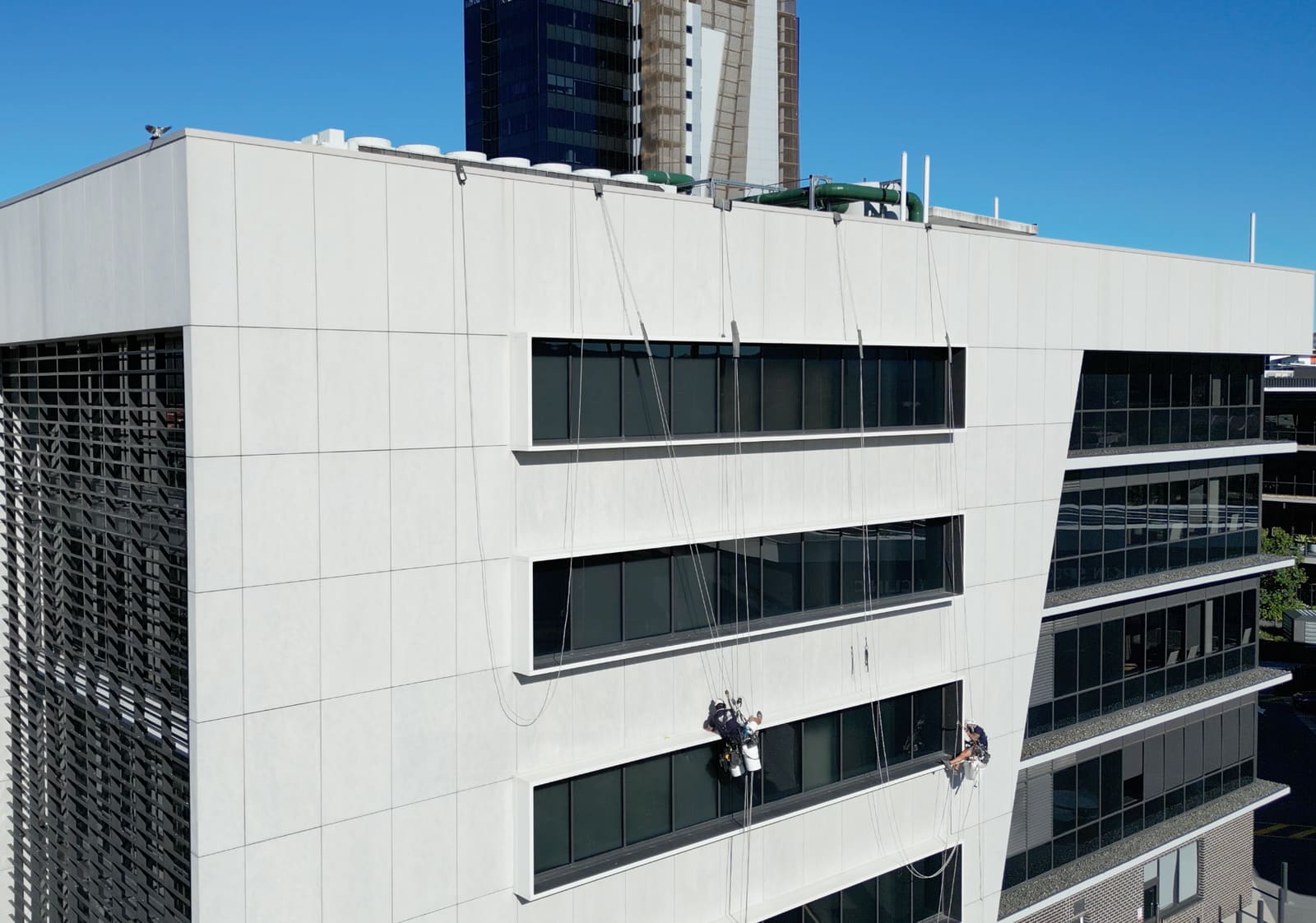
A snapshot of buildings where we've delivered this service.
These are the services clients most often pair with this one.
Yes, failed sealant is normally cut out and the joint faces are prepared before replacement. Applying new sealant directly over deteriorated material can reduce adhesion, hide the underlying failure and complicate future repairs. Any exception should be treated as a clearly explained temporary or limited repair.
Often we can identify likely defects through close-up inspection, but the visible failed joint may not be the only water path. Where the source is uncertain, we may recommend targeted water testing, exploratory removal or a staged repair to isolate the cause.
Backing rod is used where the joint design, dimensions, location and manufacturer's installation requirements call for it. It helps control sealant depth and prevent adhesion to the base of the joint. Where backing rod is unsuitable or cannot be installed, an appropriate bond-breaker detail may be required.
No. Primer requirements depend on the sealant, substrate, exposure and manufacturer's current technical data. Where primer is required, omitting it can contribute to adhesion failure. Where it is not required, unnecessary primer may also create compatibility issues.
The product is selected for the specific joint rather than using one sealant everywhere. Factors include substrate type, expected movement, UV and weather exposure, immersion risk, paintability, compatibility and the surrounding facade system.
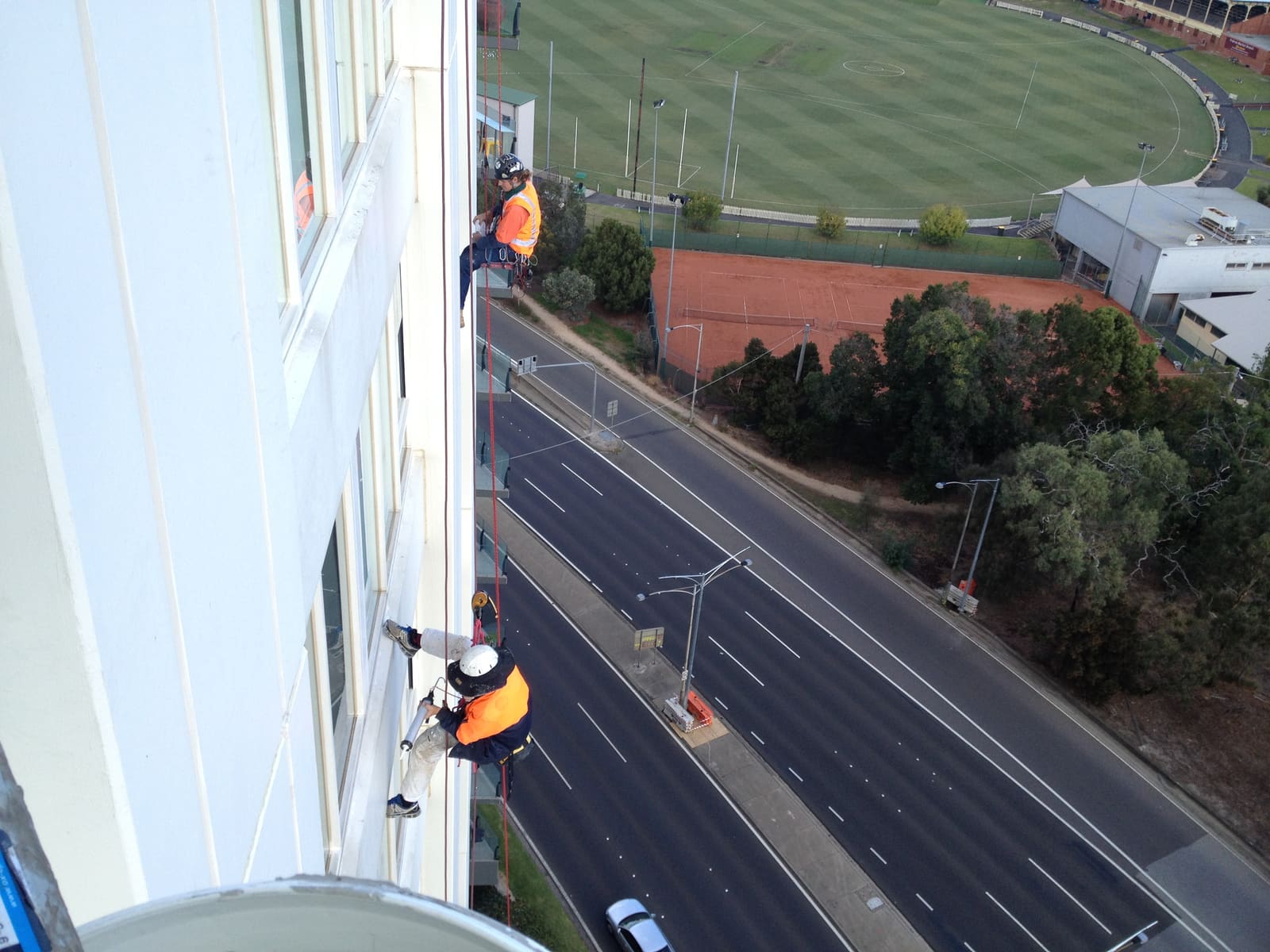
Yes. Industrial rope access allows us to reach many high-rise window perimeters, precast panel joints, slab edges, cladding joints and other difficult facade locations with a small work footprint.
No. Water ingress may come from membranes, windows, flashings, roof details, cracks, fixings, cladding interfaces or drainage defects. We will not present caulking as the answer where the evidence points to another cause.
Yes, targeted testing can be included where suitable. AAMA 501.2-style nozzle testing can help check specific glazing and joint details, but the method must match the facade system and the investigation objective.
Service life varies significantly with product type, joint design, movement, preparation, exposure, installation quality and maintenance. We avoid promising a universal lifespan without first understanding the joint and selected system.
We can usually select from available manufacturer colours and may arrange samples where appearance is critical. Exact matching can be affected by ageing, UV exposure, dirt and differences between product ranges.
Yes. We complete targeted leak repairs, defect rectification and larger planned replacement programs. Small isolated repairs may be more economical when combined with other scheduled facade work.
We primarily service the Gold Coast, Brisbane and surrounding South East Queensland locations, with project capability in other regions depending on the scope.
Tell us what you need accessed, inspected, repaired or maintained. We'll come back to you within 24 hours, no fluff, no run-around.