“Truly exceptional, if not the most exceptional team of working-at-height experts I've ever worked with. Every job is executed with precision and professionalism.”
KP
Krishna Pryor
Palmiye Australia


A leak you cannot find is a leak that keeps costing you. Water may appear around a window, stain a ceiling or soak the carpet while entering the building several metres away. We investigate and repair recurring water ingress on high-rise apartments, multi-residential complexes and commercial buildings, from leaking windows and failed facade joints to balcony and rooftop membranes, penetrations and flashings.
A building leak often returns because the water is entering somewhere other than the place where it becomes visible. Sealing the nearest crack may leave the actual entry path untouched and can sometimes block drainage or trap moisture within the assembly.
Recurring leaks can also involve more than one defect. A failed perimeter seal may be obvious, while poor sill waterproofing, blocked drainage, a loose flashing, cracked render or an incorrectly detailed membrane termination is contributing at the same time. The repair needs to reflect the complete system and the weather conditions that trigger the leak.
The visible wet area tells us where the water finished. The investigation needs to work backwards through the building envelope to understand where it entered and how it travelled. The Australian Institute of Waterproofing has reported that waterproofing makes up less than 1% of a building's construction cost but is linked to around 80% of post-construction defects, so getting the diagnosis right matters.
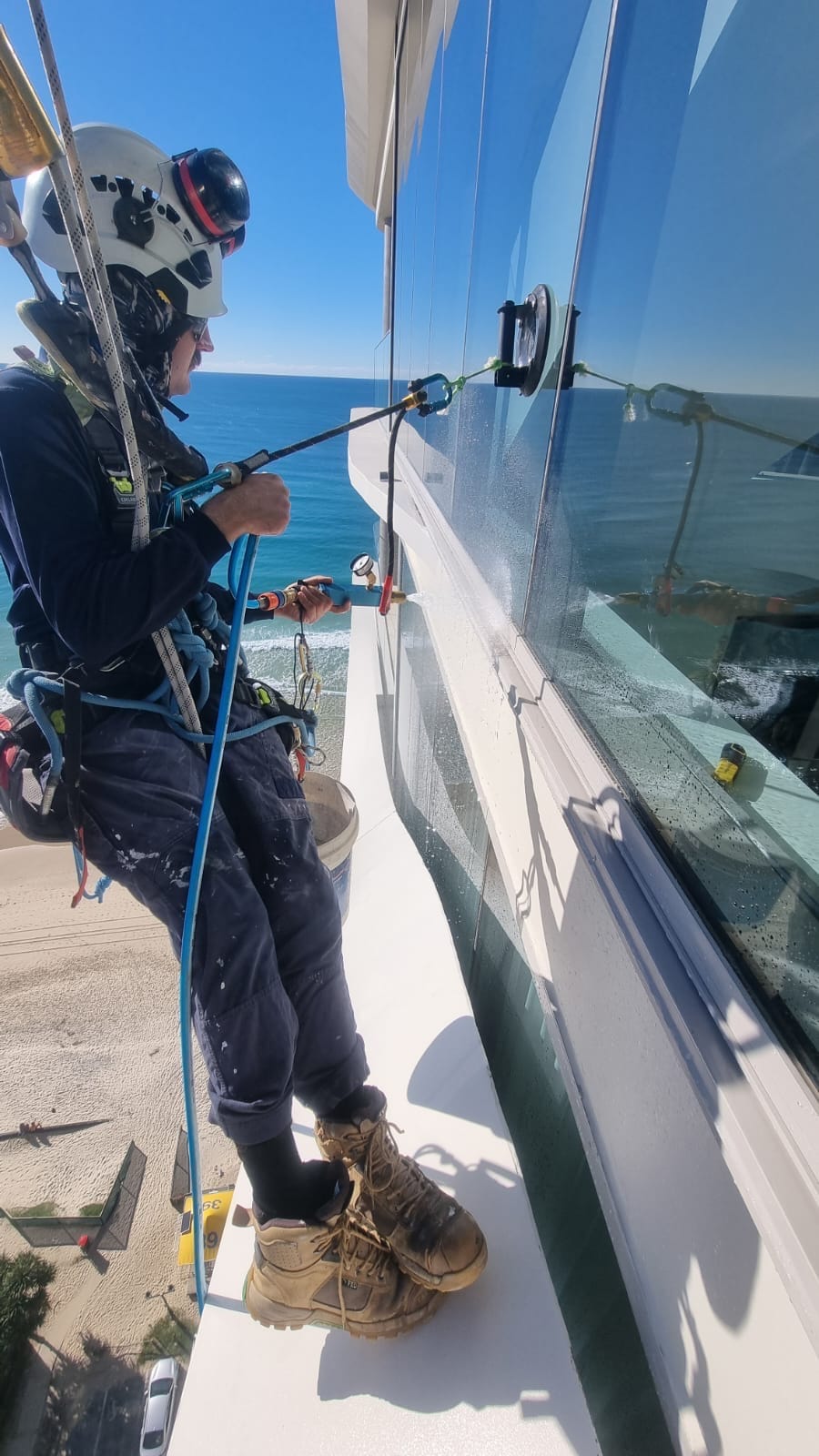
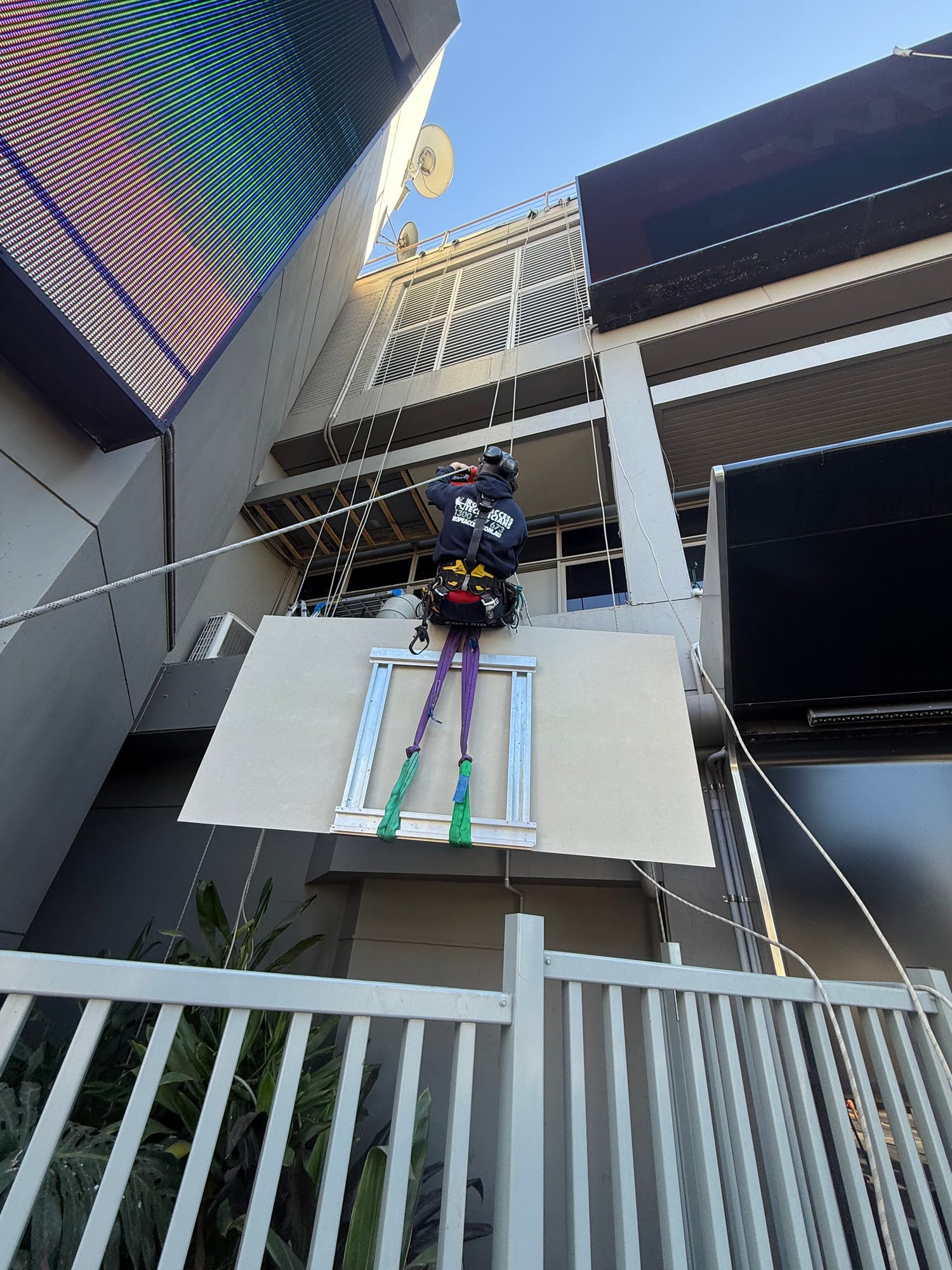
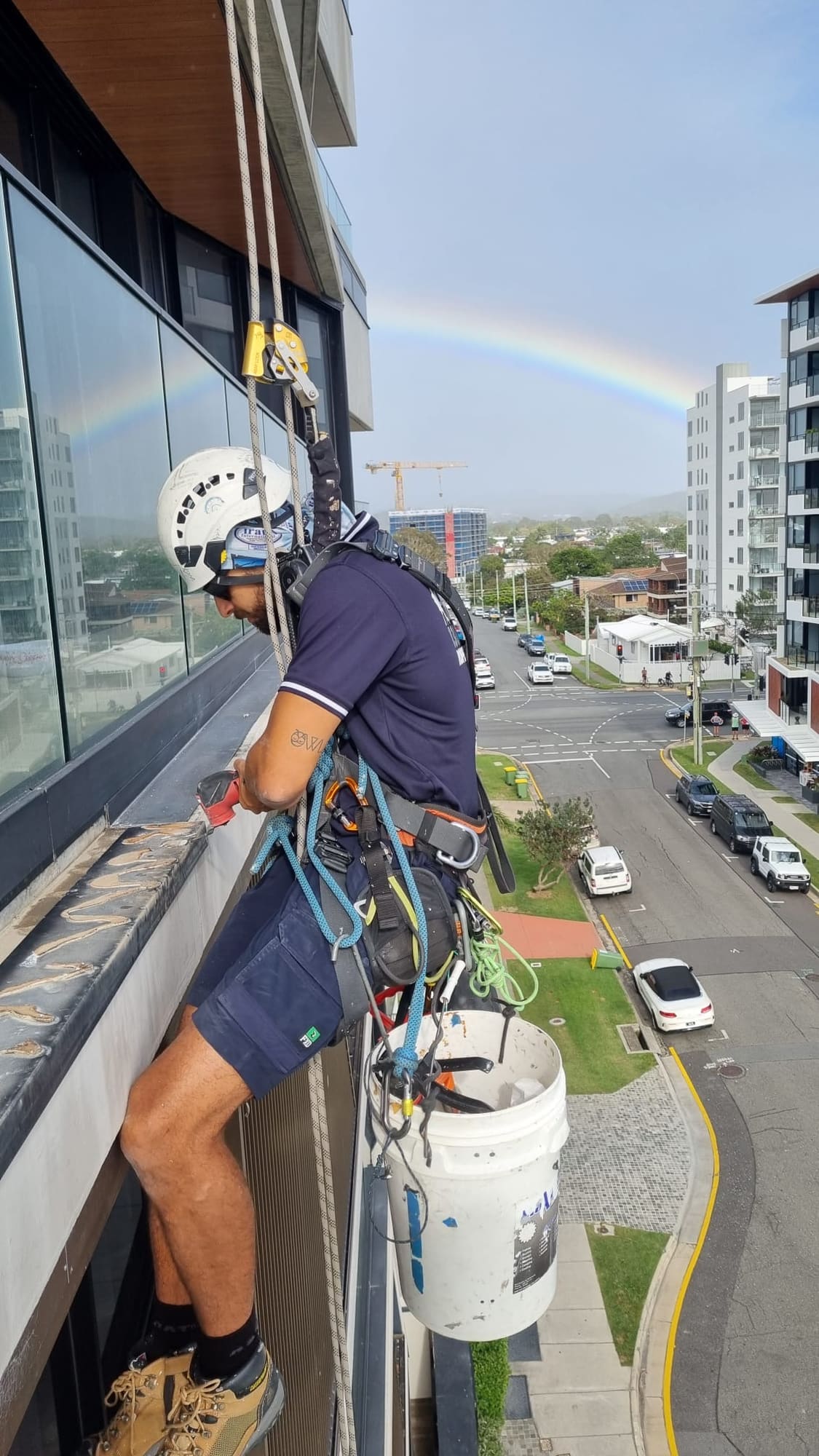
A useful leak investigation brings the internal symptom, external facade detail, weather conditions and repair history together. No single moisture meter, thermal image or spray test proves the source by itself, so the evidence is interpreted in context and the test area is isolated in a controlled sequence. Depending on the building and agreed scope, the investigation may include reviewing photos, plans, resident reports and the wind or rain conditions that trigger the leak; inspecting the internal wet area and taking baseline moisture readings; a close-up external inspection by rope access, roof access or EWP; checking sealant adhesion, cracks, frame joints, drainage, flashings, membranes and penetrations; controlled spray testing to isolate joints in a logical order; and AAMA 501.2 water checks where the method suits installed storefronts, curtain walls or sloped glazing.
A localised spray test provides evidence about the tested area under the test conditions. It does not certify that the complete facade is watertight, and a passing test does not rule out separate defects elsewhere. A controlled test can be valuable even when it rules out the suspected element, for example when a window stays dry during the agreed sequence, directing the investigation toward an adjoining sill, flashing or drainage detail and preventing money being spent on the wrong repair.
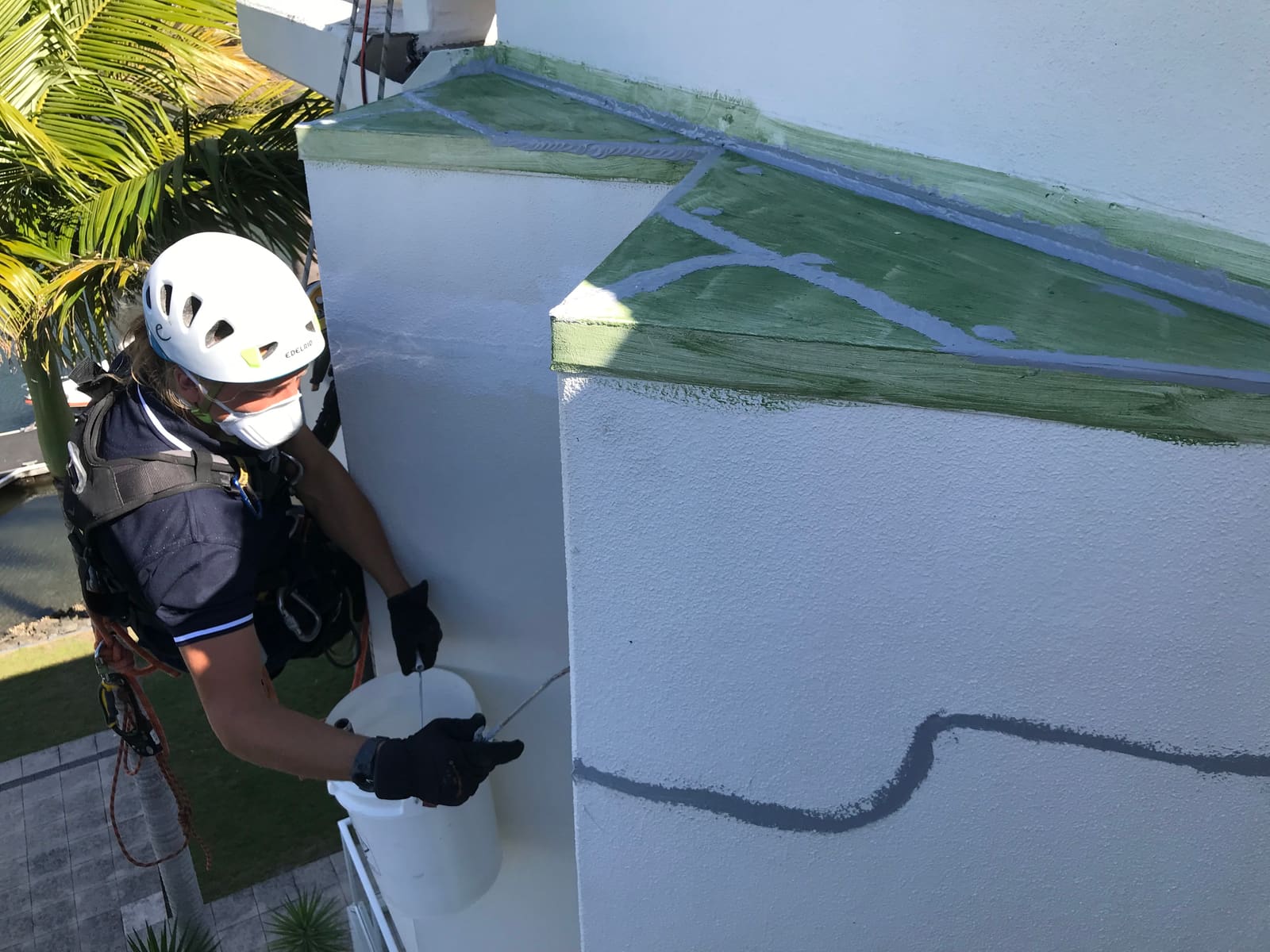
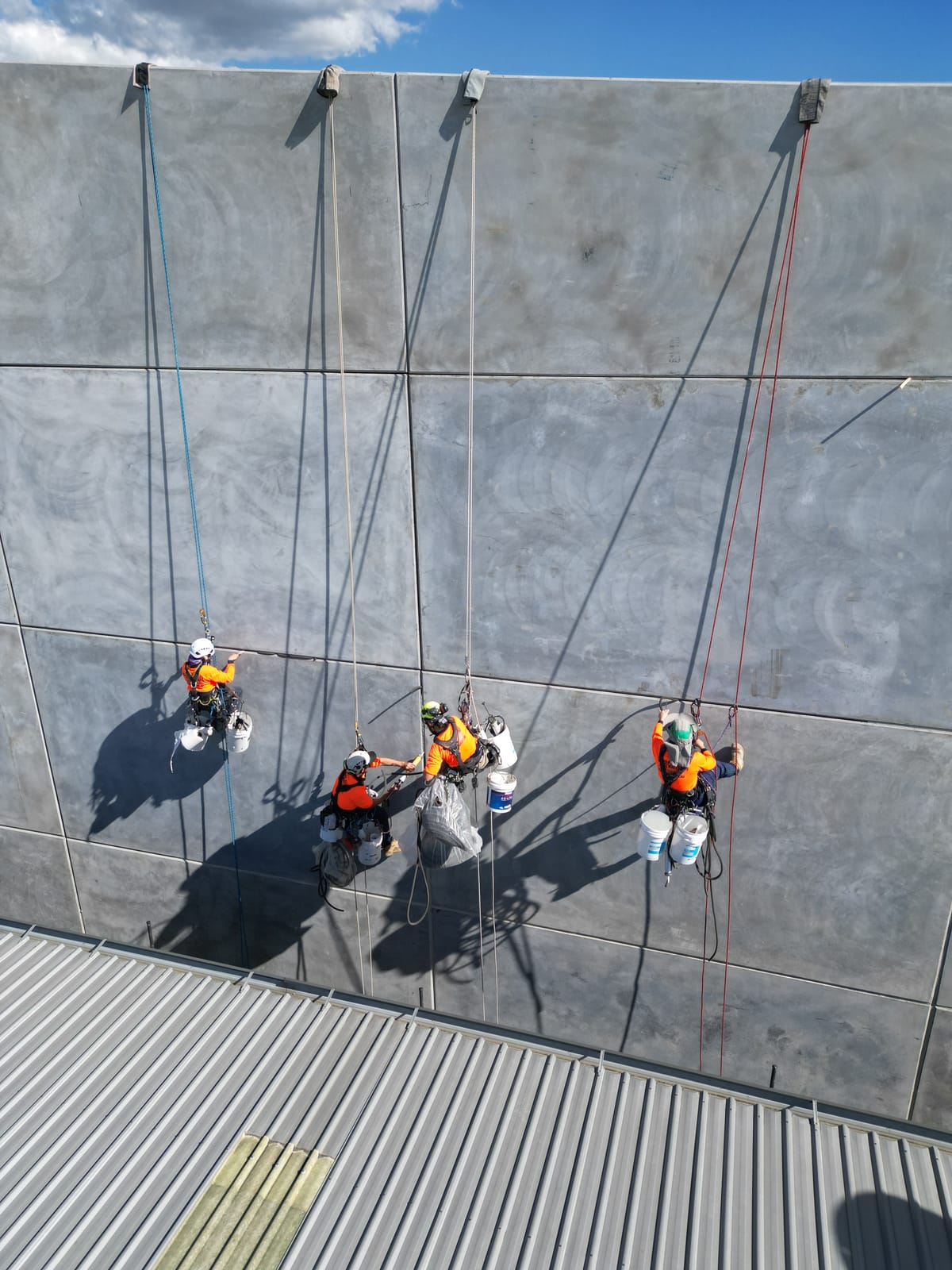
Sealant is an important part of many facade systems, but it only works when it is installed in the correct joint, onto a properly prepared substrate, with a compatible product and suitable joint geometry. Applying new sealant over failed material, covering drainage openings or sealing the wrong side of a cavity can leave the leak unresolved or make moisture harder to escape.
A successful repair may require failed sealant to be removed, the substrate cleaned and primed, backing material installed, corrosion repaired, flashings corrected, a membrane reinstated or the window removed so the concealed sill and substrate can be rebuilt. The repair should be selected after the defect is understood, not before, and it may cross more than one trade, coordinating waterproofing with glazing, sealing, painting and related remedial work.
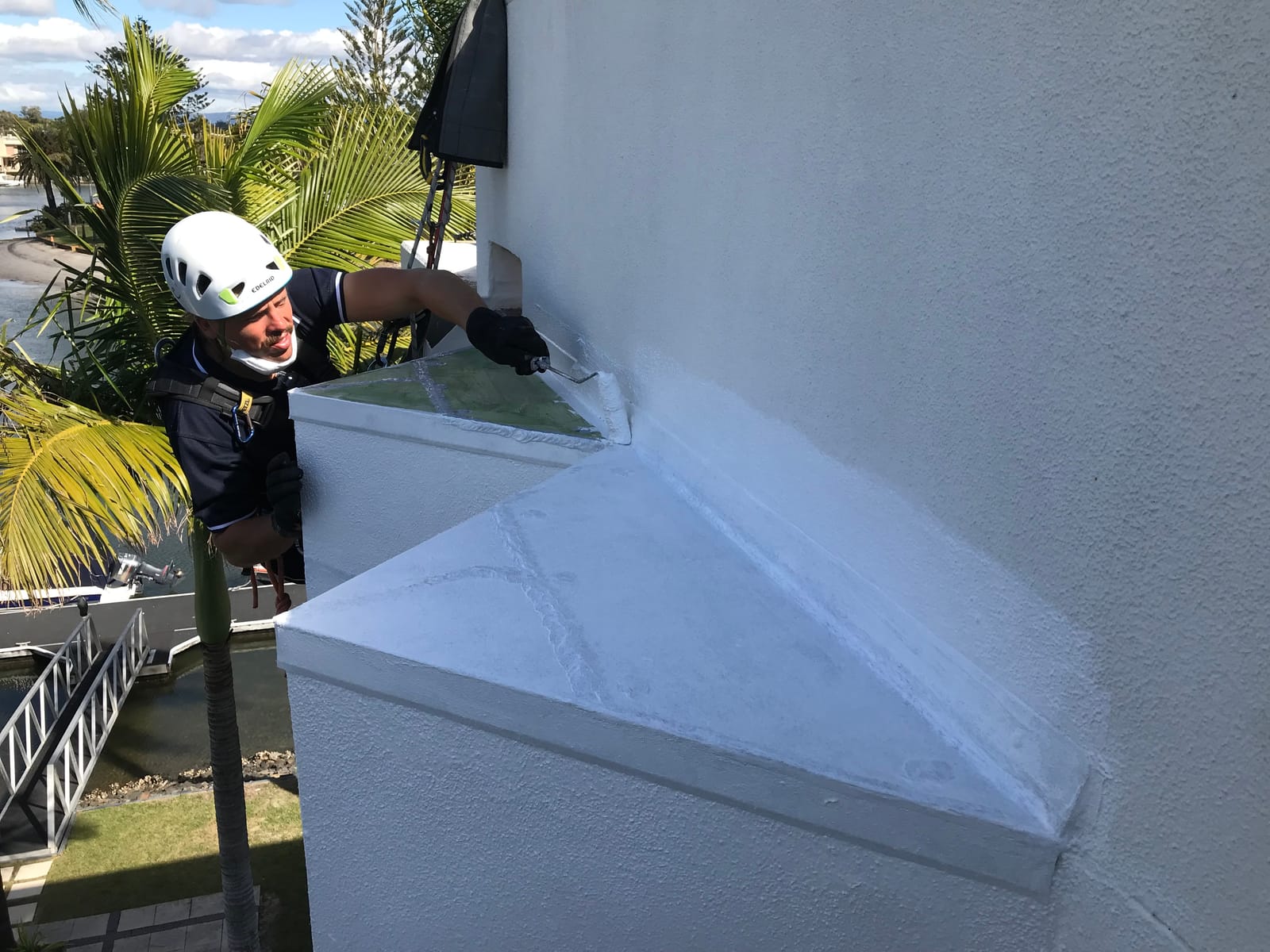
Waterproofing and leak repairs often affect residents, balconies, internal finishes and common property at the same time, so the work plan accounts for notices, access appointments, furniture protection, privacy, exclusion zones, weather, curing times and the possibility that concealed damage changes the final scope. For larger programs, work can be staged by elevation, leak priority or repair type, with daily progress updates for building managers and project teams. The reporting level matches the size and risk of the project, from a short photo record for a targeted repair to a controlled register with marked locations, materials, hold points and before-during-after evidence for a multi-unit program.
We work with body corporates and strata committees, building and facility managers, remedial builders and project managers, developers, facade and structural engineers and building consultants, glazing and facade contractors, and commercial property owners across the Gold Coast, Brisbane and South East Queensland, with suitable projects across Northern NSW and Sydney.
Safe, compliant, high-quality outcomes through a proven, repeatable process that runs the same way from first call to final sign-off.
We understand the building, the risks and your objectives before any work begins.
Practical, fit-for-purpose solutions that actually work on site, not just on paper.
Clear scope, methodology and expectations agreed up front, no surprises later.
The right people, equipment and documentation ready before day one.
Controlled delivery with clear updates, supervision and quality control throughout.
Formal sign-off, follow-up and a long-term partnership, not a one-off job.




























































Trusted by builders, engineers and property managers across South East Queensland and NSW.
“Truly exceptional, if not the most exceptional team of working-at-height experts I've ever worked with. Every job is executed with precision and professionalism.”
“I have to comment on how professional your company's service has been. I have never had a report as thorough as this. I shall highly recommend your services for ongoing works.”
“I cannot speak highly enough of them. Chay and his team have gone out of their way to assist us, nothing is ever 'too hard' and they always carry out the works to the highest standard possible.”
These are the services clients most often pair with this one.
Often, but leak investigation is a process of evidence and isolation rather than guesswork. Some sources can be confirmed by controlled testing, while others require opening-up work, storm observation or consultant input.
For a clearly defined defect, photos, plans and an inspection may be enough. Where the source is uncertain or previous repairs have failed, a separate investigation or test scope is usually the fairest way to avoid pricing an assumed repair that may not solve the problem.
Yes, many facade joints, window interfaces, cracks, flashings and penetrations can be reached and repaired by rope access. Some balconies, rooftops, podiums and concealed sill repairs may require internal access, an EWP, scaffold or another method.
Sometimes a failed sealant joint is the cause, but silicone is not a universal waterproofing repair. The joint location, product, preparation, adhesion, backing material, drainage and surrounding detail must all be correct.
AAMA 501.2 is a diagnostic field water-check method for installed storefronts, curtain walls and sloped glazing systems. It can help isolate leakage at selected permanently closed joints when the method suits the assembly and investigation objective.
No. A water test provides evidence about the tested area under the test conditions. It does not certify every part of the facade, and separate defects may exist outside the selected zone.
Yes. The repair may involve perimeter sealing, frame joints, glazing seals, drainage, flashings, sub-sills or the waterproofed substrate beneath the frame. In some cases the window needs to be removed and reinstalled so the concealed detail can be rebuilt correctly.
Sometimes a localised detail or compatible surface system may be suitable, but many balcony leaks involve concealed membranes, thresholds, outlets, cracks or falls. A no-tile-removal option should not be promised before assessment.
Yes, subject to the project, access and selected system. The scope may include local repairs, penetrations, membrane replacement, drainage details, substrate preparation and consultant or manufacturer input.
Cost depends on the certainty of the source, access, testing, affected area, membrane or facade system, substrate condition, resident coordination and concealed damage. A targeted investigation can help define the repair before a larger price is committed.
Service life depends on the system, exposure, substrate movement, drainage, preparation, installation quality and maintenance. Warranty wording should be based on the actual repair scope and product requirements.
That information is valuable. Record the wind direction, intensity, duration and exact time the moisture appears, then provide photos or video where possible. Wind-driven rain can expose joints and pressure paths that stay dry in ordinary rainfall.
Yes, the reporting level can be matched to the scope. Options may include findings, marked locations, test sequence, limitations, repair recommendations and before-during-after photographs.
Not for every leak. Consultant input is recommended where the issue involves structural movement, cladding design, widespread facade failure, complex drainage, specification of a new system or conclusions outside a trade contractor's scope.
Yes. Most projects can be planned around occupied buildings using notices, balcony appointments, internal protection, privacy controls, exclusion zones, daily updates and sequencing around weather and curing requirements.
Tell us what you need accessed, inspected, repaired or maintained. We'll come back to you within 24 hours, no fluff, no run-around.