“Truly exceptional, if not the most exceptional team of working-at-height experts I've ever worked with. Every job is executed with precision and professionalism.”
KP
Krishna Pryor
Palmiye Australia


Cracking concrete, bubbling paint, failed sealant and unexplained water leaks can all indicate that part of a building's exterior is no longer performing as intended. Our rope access building maintenance helps owners, body corporates, facility managers, builders and consultants inspect, maintain and repair difficult-to-access areas of high-rise, commercial and apartment buildings.
Many major rectification projects begin as relatively minor defects. A small crack can let moisture into the building envelope, failed sealant can direct water behind a window frame, bubbling paint may indicate moisture or coating failure, and spalling concrete can expose reinforcing steel so corrosion continues. Common warning signs include:
Early investigation can help determine whether the problem is cosmetic, maintenance-related or evidence of a more significant building-envelope defect.
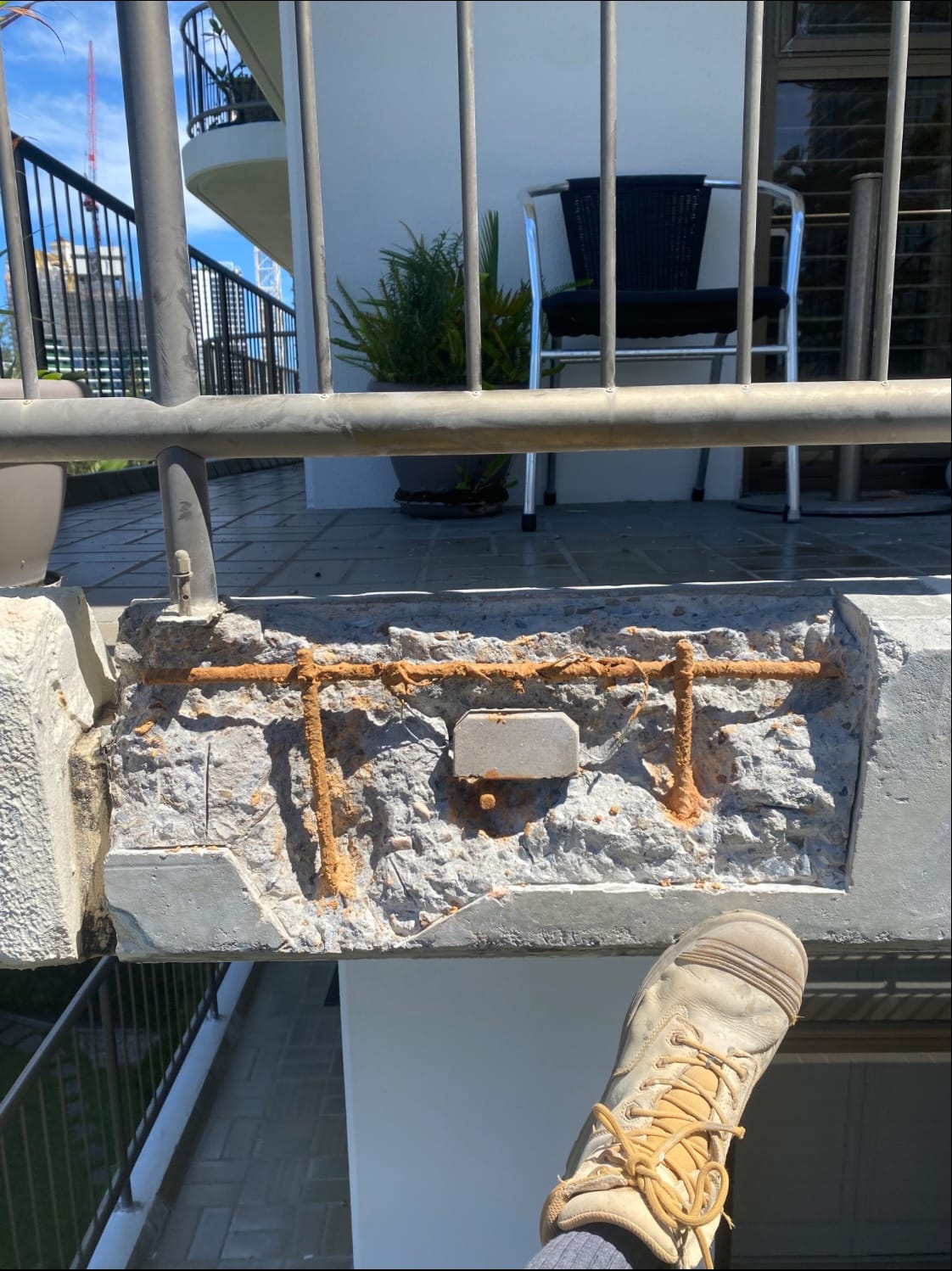
One of the most common reasons building repairs fail is that the visible symptom is treated without identifying why it occurred. Examples include painting over a moisture-affected surface, applying sealant over an existing failed joint, patching cracked render without considering movement, sealing drainage paths that were designed to release water, repairing internal water damage without addressing the external entry point, or replacing a damaged coating while leaving corroding reinforcement untreated.
A repair that looks acceptable when completed may fail again if the underlying defect remains. For this reason, the first stage of maintenance work may involve close inspection, moisture readings, adhesion testing, water testing, opening-up works or input from an engineer or facade consultant. The level of investigation should be proportionate to the defect, the risk it presents and the consequences of getting the repair wrong.
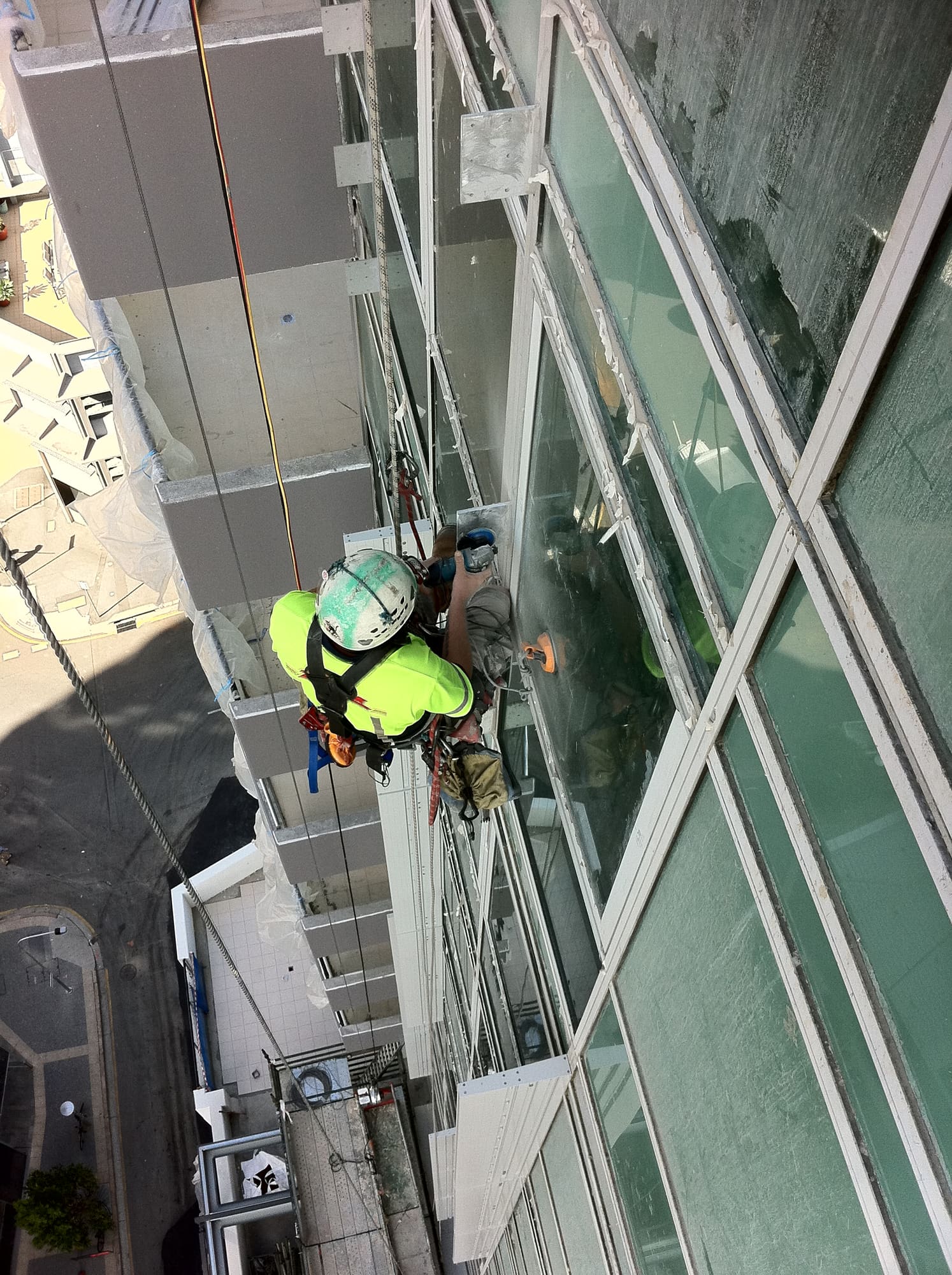
Many facade defects occur in locations that are difficult to inspect from balconies, windows or ground level. Rope access can provide close access to external walls, slab edges, architectural features, recessed windows, podiums, roofs and other areas that may otherwise require scaffolding, swing stages or large access equipment. Depending on the building and scope, it can offer:
Rope access is not the right method for every project. Where another method is safer, more productive or better suited to the work, this is identified during planning.
Our team assists with a wide range of high-rise and commercial maintenance, facade repair and rectification. These summaries route you to the specialist pages:
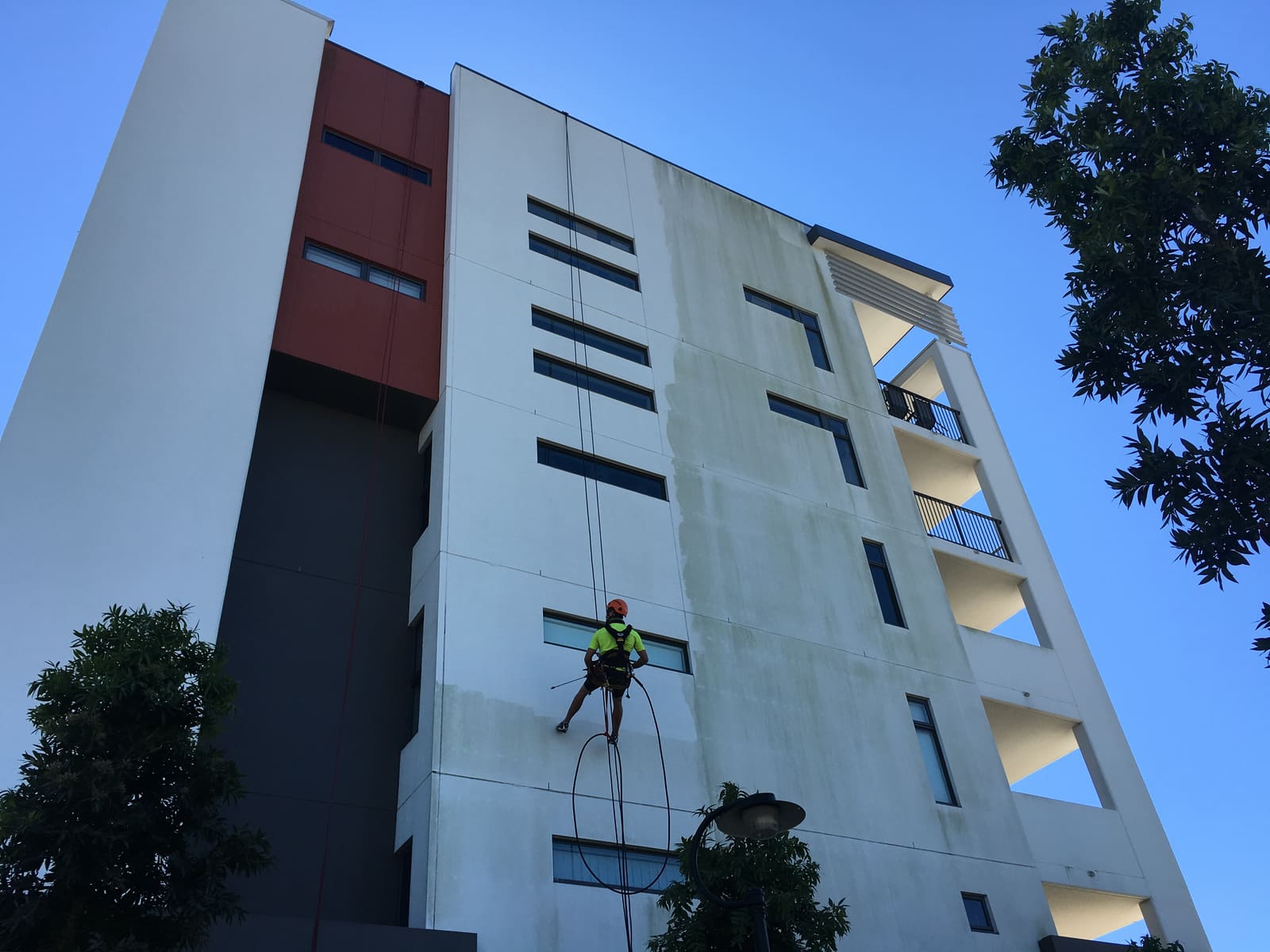
Building maintenance is often requested after a leak, concrete failure or resident complaint, but waiting for visible failure can make repairs more disruptive and expensive. We assist with both. Reactive repairs may be required for active water ingress, falling or loose material, concrete spalling, a failed window or facade component, storm damage or an urgent safety concern, and may begin with temporary make-safe work followed by investigation and permanent rectification.
Planned maintenance helps stakeholders budget for repairs and address deterioration before it becomes an emergency. A program may include periodic facade inspections, sealant replacement, localised concrete repairs, protective coating maintenance, window and glazing maintenance, building washdowns, height safety system inspections, prioritised defect rectification, photographic condition records and budget planning for future works, based on the building's condition, location, materials, exposure and repair history.
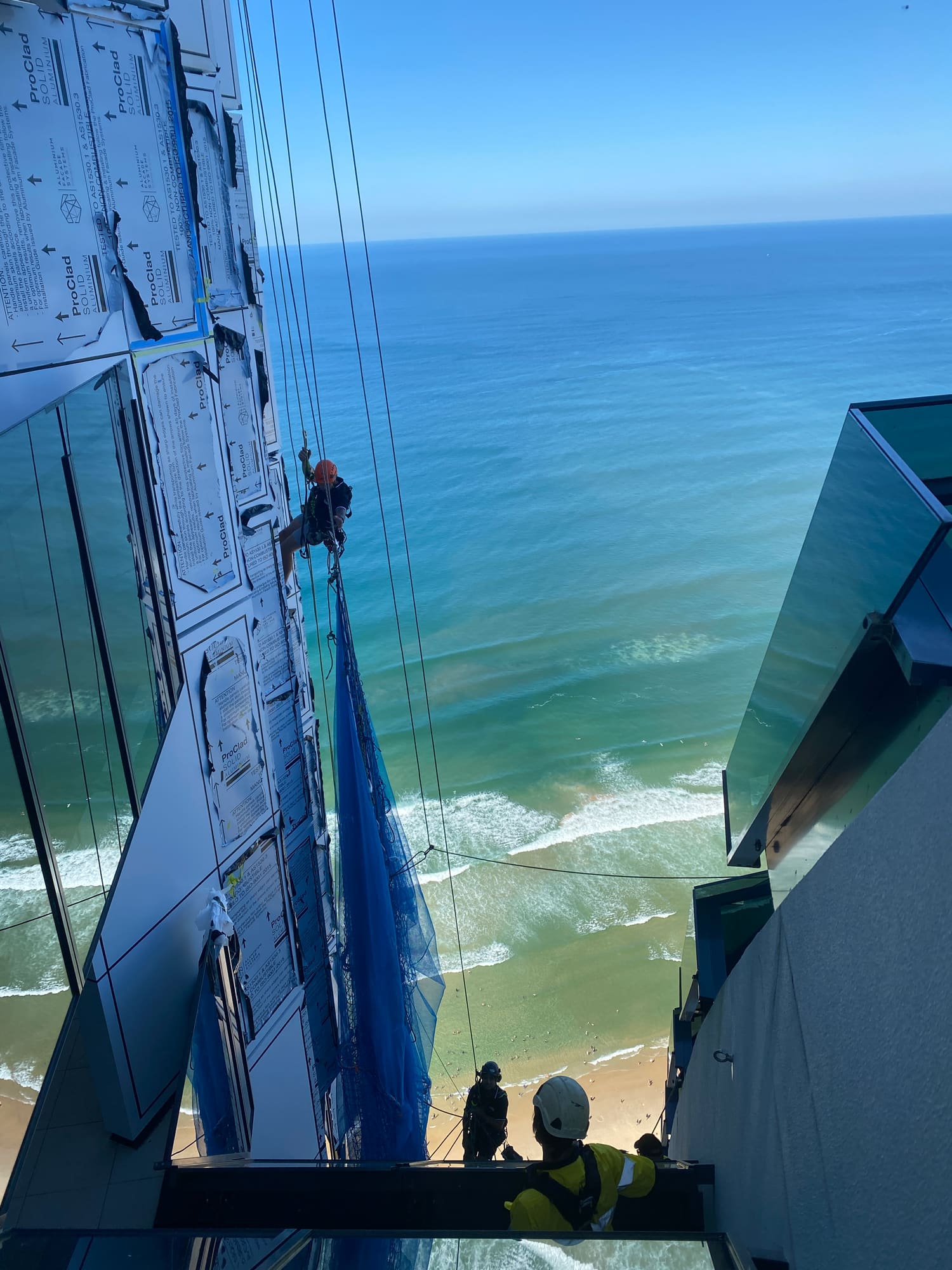
Our building maintenance and facade rectification services suit apartment and residential towers, commercial buildings, hotels and resorts, retirement and aged-care facilities, retail centres, hospitals and healthcare, education facilities, industrial buildings, stadiums and public infrastructure, and new-construction defect-rectification projects.
We work with body corporates and strata managers, building and facility managers, property owners, remedial builders, new-construction builders, developers, structural and facade engineers, waterproofing consultants, glazing and facade contractors, and painting and maintenance contractors.
We begin by reviewing the reported issue, affected areas, photographs, previous reports and repair history. Where required, our technicians access the area to inspect the visible defect and surrounding facade elements. The next step may be a straightforward repair, further testing, opening-up works or input from an engineer or specialist consultant. Repairs are photographed and documented, and any additional deterioration is prioritised for monitoring, repair or further investigation.
External building repairs frequently involve concealed conditions. The full extent of corrosion, water damage, failed waterproofing or substrate deterioration may not be known until coatings, sealant, render, windows or damaged concrete are removed. A clear proposal should distinguish between confirmed work, reasonable assumptions, exclusions, provisional allowances, schedule-of-rate work and defects requiring additional approval. This provides transparency and avoids unrealistic allowances being included just to create an apparently fixed price.
Safe, compliant, high-quality outcomes through a proven, repeatable process that runs the same way from first call to final sign-off.
We understand the building, the risks and your objectives before any work begins.
Practical, fit-for-purpose solutions that actually work on site, not just on paper.
Clear scope, methodology and expectations agreed up front, no surprises later.
The right people, equipment and documentation ready before day one.
Controlled delivery with clear updates, supervision and quality control throughout.
Formal sign-off, follow-up and a long-term partnership, not a one-off job.



























Trusted by builders, engineers and property managers across South East Queensland and NSW.
“Truly exceptional, if not the most exceptional team of working-at-height experts I've ever worked with. Every job is executed with precision and professionalism.”
“I have to comment on how professional your company's service has been. I have never had a report as thorough as this. I shall highly recommend your services for ongoing works.”
“I cannot speak highly enough of them. Chay and his team have gone out of their way to assist us, nothing is ever 'too hard' and they always carry out the works to the highest standard possible.”
These are the services clients most often pair with this one.
External building maintenance can include facade inspections, concrete repairs, crack repairs, waterproofing, leak rectification, joint sealing, painting, glazing repairs, window and door maintenance, building washdowns and other difficult-access repairs.
Yes. Leak investigations may involve inspecting the facade, reviewing likely entry points, taking moisture readings and completing controlled water testing. The appropriate method depends on the building system and reported leak.
Yes. Concrete repair work can include removing unsound concrete, treating reinforcement and reinstating the repair area. Engineer involvement may be recommended for structural, extensive or recurring defects.
Minor repairs may sometimes be completed during an inspection if the defect, repair method, materials and authority to proceed are clear. More complex repairs should generally be properly scoped before work begins.
Rope access can be more economical for targeted inspections and repairs, particularly where work is spread across several difficult-to-access locations. However, the best access method depends on the work area, duration, materials, tools and number of workers required.
Yes. The reporting format can be tailored to the project and may include defect photographs, locations, observations, repair records and recommendations. Engineer certification or specialist advice is separate unless specifically included.
Fixed pricing may be possible where the scope and quantities are clearly defined. Where concealed conditions or unknown repair quantities are involved, a schedule of rates, provisional allowance or initial investigation may provide a fairer and more transparent approach.
No. We work on a range of commercial, residential and complex assets. Rope access is particularly useful where conventional access is difficult, disruptive or disproportionate to the size of the repair.
Yes. Building inspections and defect records can be used to prioritise immediate repairs, monitor lower-risk defects and plan future maintenance expenditure.
Tell us what you need accessed, inspected, repaired or maintained. We'll come back to you within 24 hours, no fluff, no run-around.