“Truly exceptional, if not the most exceptional team of working-at-height experts I've ever worked with. Every job is executed with precision and professionalism.”
KP
Krishna Pryor
Palmiye Australia


Committees need enough information to make responsible decisions, without being overwhelmed by technical language or pressured into an oversized scope. We inspect, repair, clean and maintain difficult-to-access common property, with clear photographs, practical priorities and respectful delivery around residents.
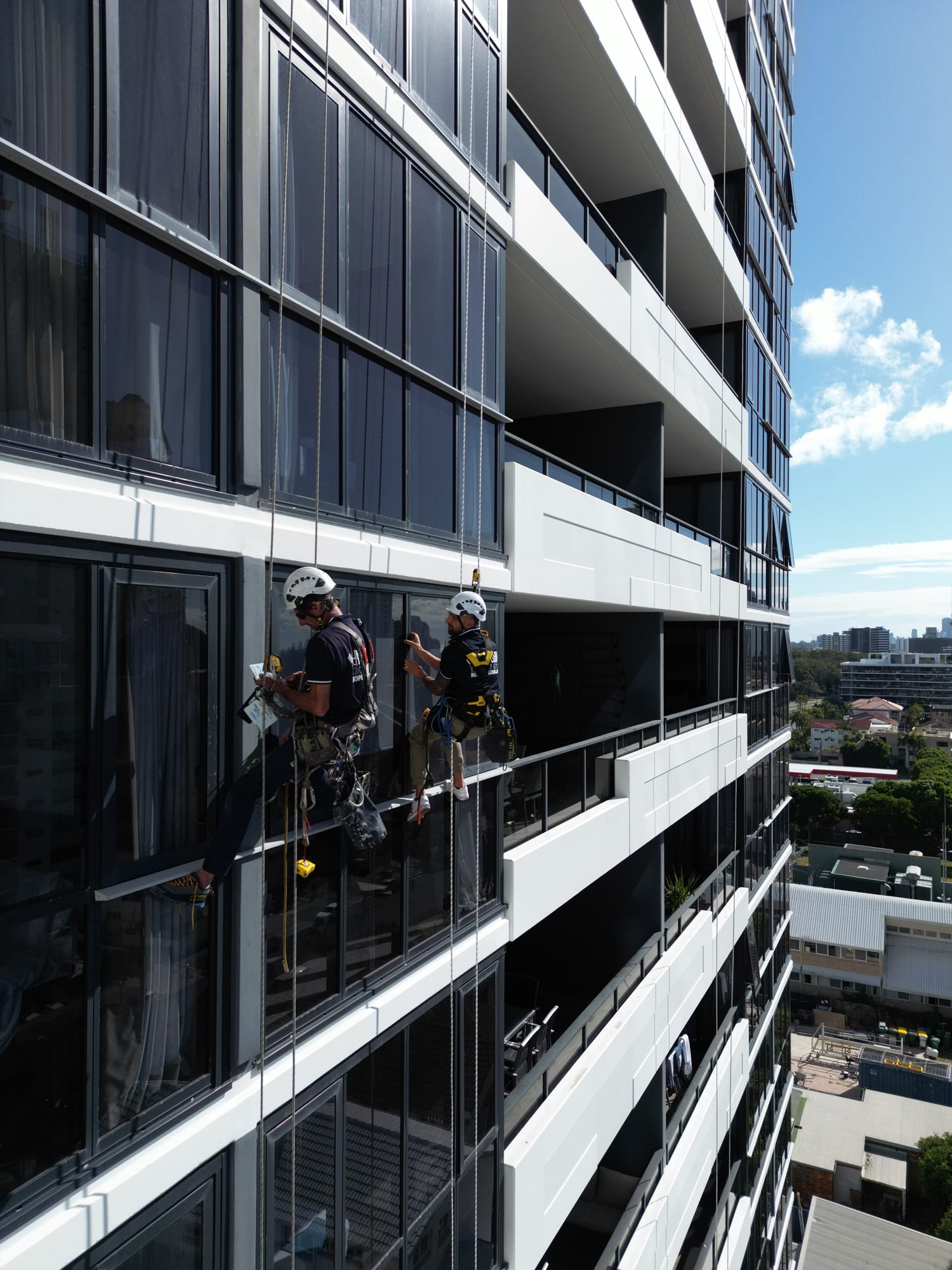
Facade deterioration can be difficult to understand from the ground. A recurring leak may have several possible causes. A small rust stain can indicate hidden concrete corrosion. Failed sealants may be localised or part of a wider age-related issue. The committee needs to know what is urgent, what can be monitored and what can be staged.
We provide practical access and clear records so the body corporate, strata manager and building manager can make decisions based on evidence. Our scopes explain what is included, where the work will occur and how unknown conditions will be handled.
The objective is not to create fear. It is to protect people, common property and long-term value while keeping the work proportionate to the actual condition of the building.
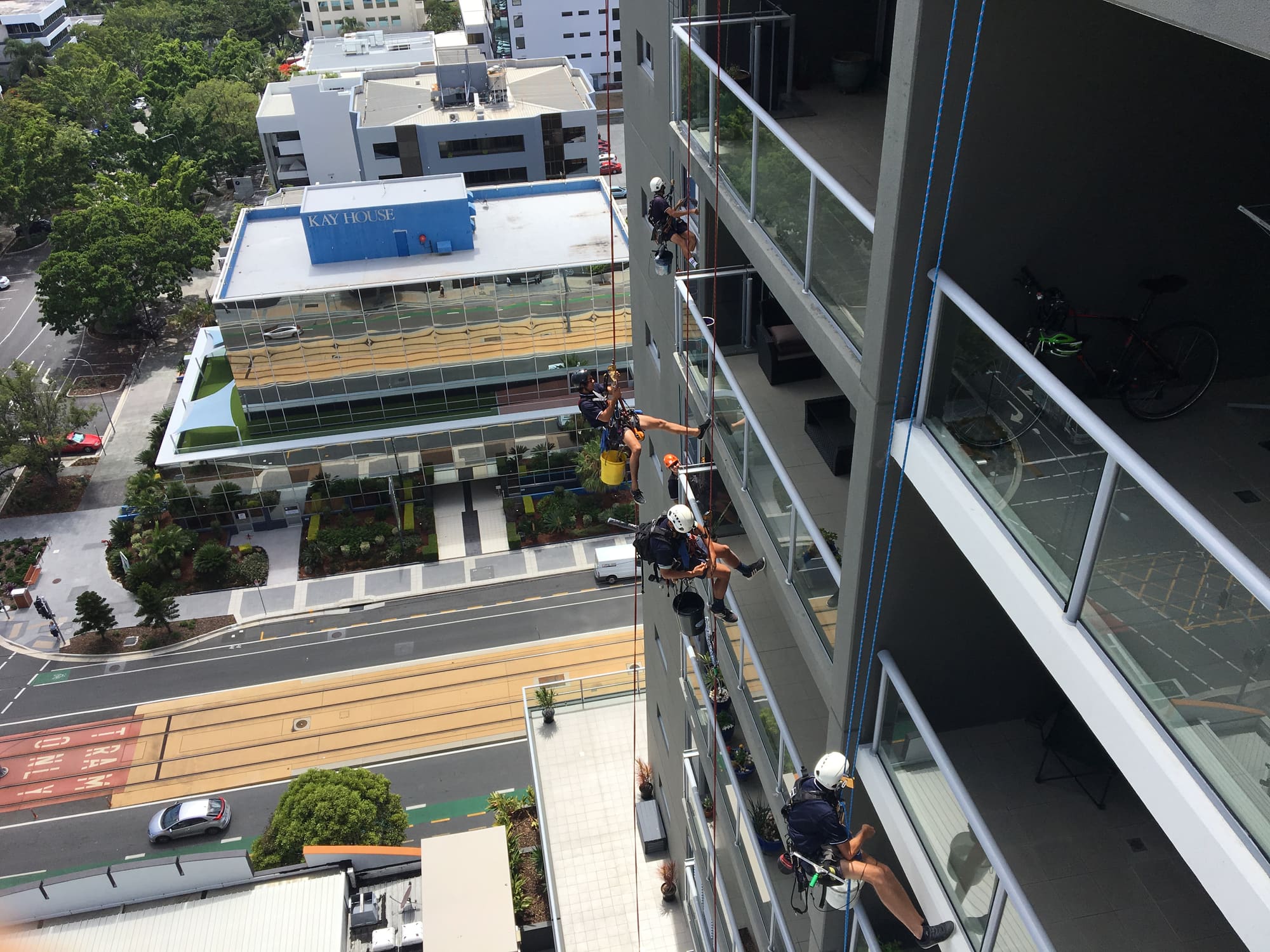
Facade work occurs outside people's homes. Our team is briefed to be polite, discreet and respectful of privacy, balconies, vehicles, gardens and common areas. Work zones, access requirements and likely disruption are coordinated with the authorised building contact.
Where resident notices are required, we can provide clear work-area information and scheduling details for distribution by the strata or building manager. Issues are reported through the nominated contact so the committee remains in control of communication.

































Safe, compliant, high-quality outcomes through a proven, repeatable process that runs the same way from first call to final sign-off.
We understand the building, the risks and your objectives before any work begins.
Practical, fit-for-purpose solutions that actually work on site, not just on paper.
Clear scope, methodology and expectations agreed up front, no surprises later.
The right people, equipment and documentation ready before day one.
Controlled delivery with clear updates, supervision and quality control throughout.
Formal sign-off, follow-up and a long-term partnership, not a one-off job.
Trusted by builders, engineers and property managers across South East Queensland and NSW.
“Truly exceptional, if not the most exceptional team of working-at-height experts I've ever worked with. Every job is executed with precision and professionalism.”
“I have to comment on how professional your company's service has been. I have never had a report as thorough as this. I shall highly recommend your services for ongoing works.”
“I cannot speak highly enough of them. Chay and his team have gone out of their way to assist us, nothing is ever 'too hard' and they always carry out the works to the highest standard possible.”
The strata manager, committee representative or authorised building manager can contact us. The body corporate should confirm who has authority to approve inspections, access and expenditure.
Often, yes. Once safety-critical and water-ingress risks are understood, work can frequently be grouped by priority, elevation, access setup or financial year. Staging should not defer an immediate safety risk.
We identify balcony, window, parking and exclusion requirements during planning. The authorised building representative normally distributes notices, while our team provides clear dates, areas and preparation instructions.
Fixed scopes are invoiced as approved. If latent conditions or requested changes may alter the price, we document them and seek approval through the agreed pathway before proceeding, except where an immediate make-safe action has been authorised.
Not for every maintenance task. An engineer may be appropriate for structural concrete, significant cracking, widespread facade failure, design changes or where formal technical certification is required. We can work directly to the engineer's scope.
Height safety systems generally require periodic inspection, testing and certification in accordance with the applicable standards, manufacturer requirements and site conditions. Annual certification is common for operational systems. We can review the asset register and confirm the required schedule.
Tell us what you need and we'll tailor our approach to your role. We'll come back to you within 24 hours, no fluff, no run-around.