
Height safety compliance: what building owners need to know
Your obligations around roof anchors and fall-arrest systems, and how often they really need recertifying.


A plain-English guide to concrete cancer, how to spot it early, why it gets worse, and what a proper repair actually involves.
This is placeholder article body copy, replace it with the migrated post content. The formatting below shows how headings, paragraphs and lists will render.
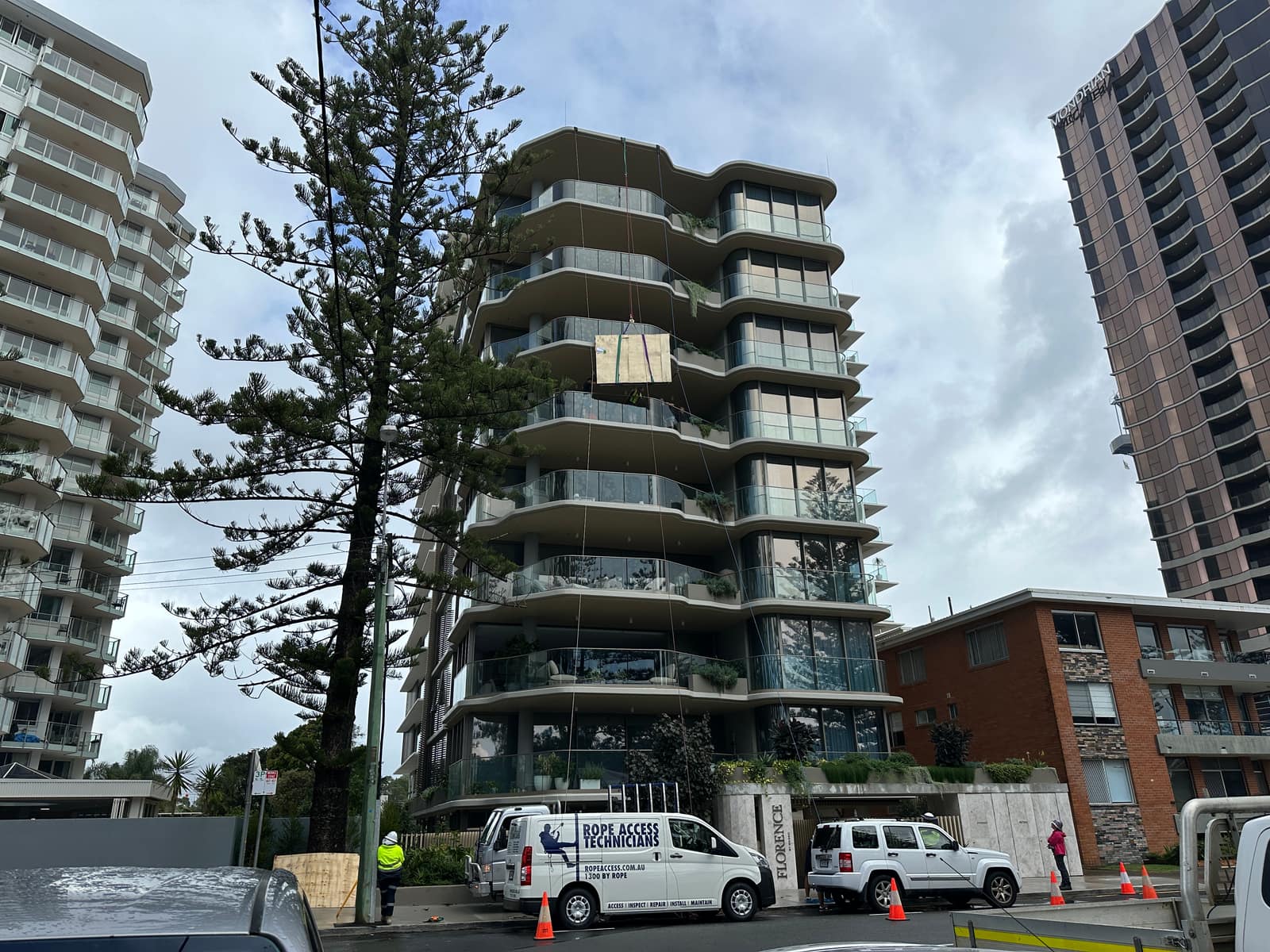
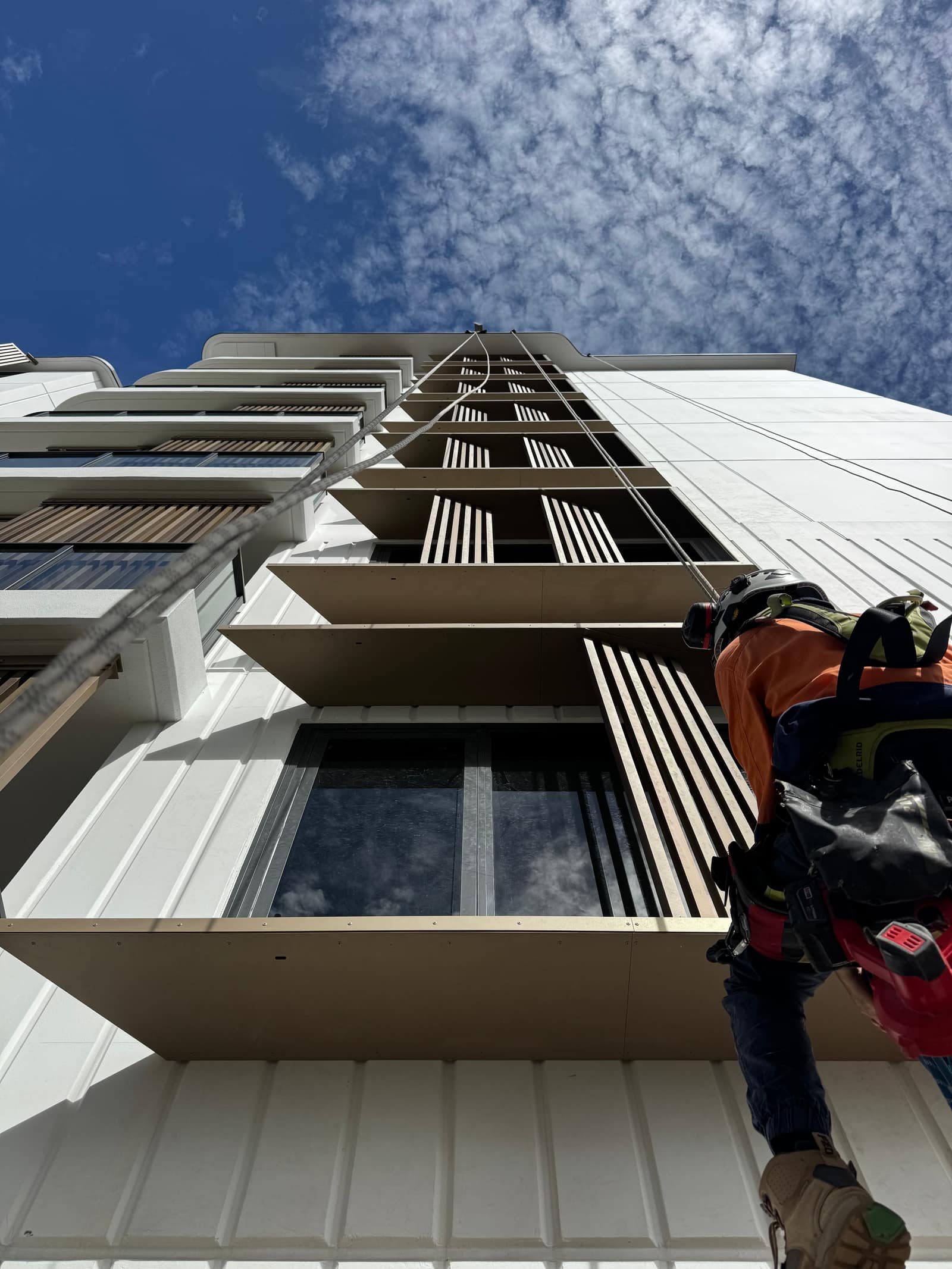
A plain-English guide to concrete cancer, how to spot it early, why it gets worse, and what a proper repair actually involves. On a high-rise façade, the cost of reaching a problem the traditional way often dwarfs the repair itself, which is exactly why rope access changes the equation.
Left unaddressed, small defects compound. Water finds its way in, reinforcement corrodes, and a minor patch becomes a major remedial program. Catching and fixing issues early is almost always the cheaper path.
Our directly-employed, IRATA-trained tradespeople access every elevation up close, document what they find against each elevation, and rectify it to specification, with a complete before / during / after record for owners, engineers and insurers.
Your obligations around roof anchors and fall-arrest systems, and how often they really need recertifying.
What a thorough façade inspection should cover, and the red flags owners' committees shouldn't ignore.
When rope access wins on cost and speed, and the situations where scaffold still makes sense.
Tell us what you need accessed, inspected, repaired, or maintained. We'll come back to you within 24 hours, no fluff, no run-around.